
TIK Construction

WATER HEATER LEAK · VANCOUVER WA + PORTLAND OR

Water Heater Leak Restoration in Vancouver WA — Tank Failures and Slow Leaks

A failed water heater releases 40–80 gallons quickly and continues leaking from the supply line until water is shut off. Even slow-leak failures soak floors and subflooring before discovery. TIK responds within 60 minutes, extracts water, dries the structure, and rebuilds — under one roof. Insurance billed direct.

  • IICRC Certified
  • Licensed WA + OR
  • All Major Insurance
  • 24/7
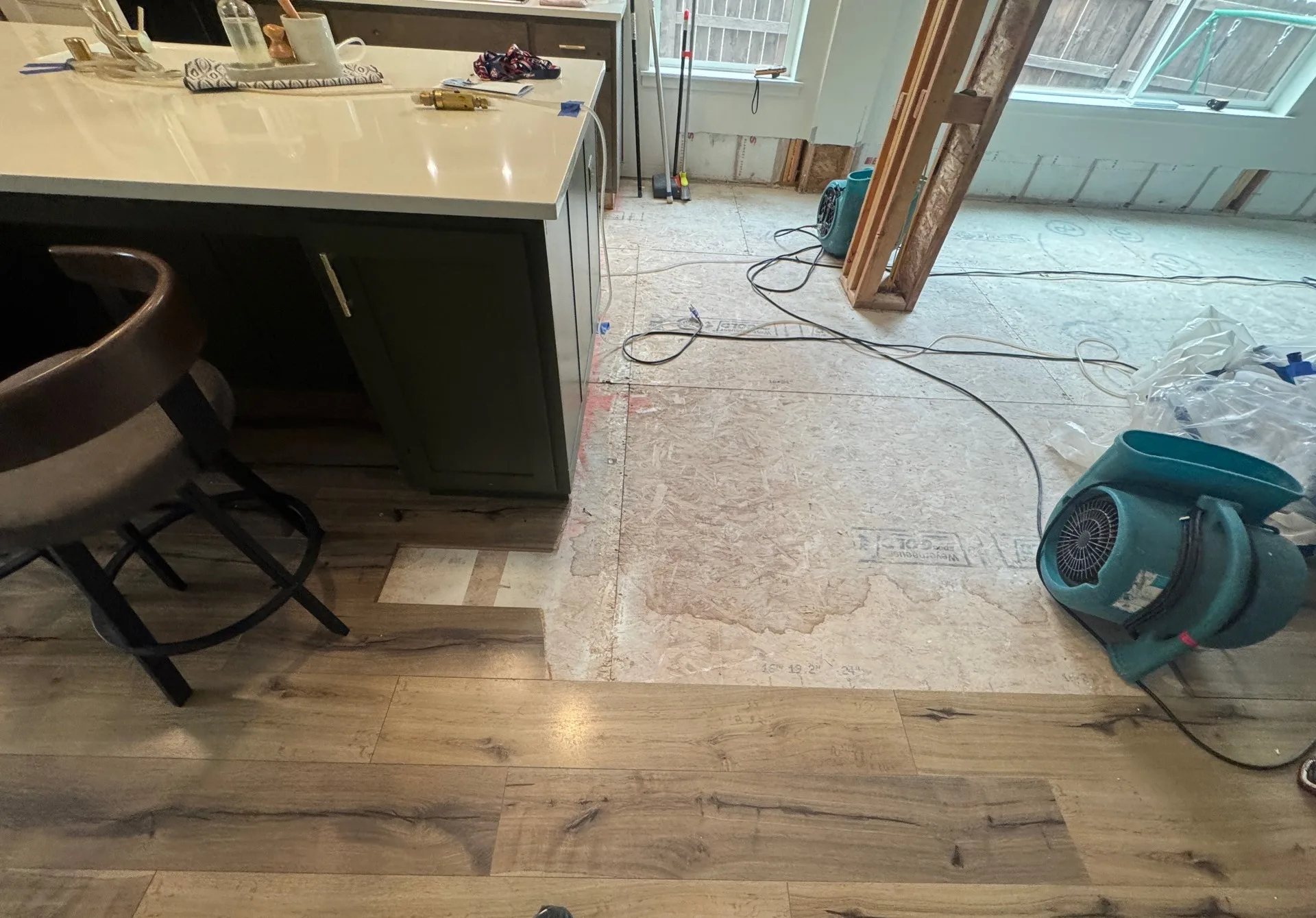
Water Heater Leak Restoration work by TIK Construction

Water heater failures — fast leaks vs slow leaks

Water heater failures fall into two categories that produce different damage profiles. Fast failures — tank rupture, pressure-relief valve failure, broken supply line connections — release significant water in minutes. Damage is dramatic but obvious. Slow failures — corroded tank seams, anode rod failure producing slow seepage, slab leaks from connected piping — produce damage over weeks or months that's often only discovered when secondary symptoms appear (mold, warped flooring, soft drywall).

Most water heaters live in mechanical rooms, garages, or closets — but the water from a failure travels well beyond. Mechanical-room floods soak adjacent rooms through subflooring. Garage water heater failures damage drywall in adjacent living spaces. Slab leaks from connected piping can soak hardwood flooring across multiple rooms before discovery.

Vancouver and Portland metro homes typically have 40–50 gallon tank water heaters with 8–12 year lifespans. Many homes still have original water heaters from when the home was built, which means a substantial population of water heaters at or beyond their service life. Tankless heaters fail differently — often at supply-line connections in unheated mechanical rooms during cold weather.


Common water heater failure modes

  • Tank corrosion / rupture

    Tanks corrode from the inside, accelerated by hard water. Eventual rupture releases the full tank volume at once — typically 40–80 gallons in 1–2 minutes. The supply line continues feeding water until shut off.

  • Pressure-relief valve failure

    The pressure-relief valve on top of the tank is designed to release if pressure exceeds safe limits. A failed valve can leak continuously, producing slow flooding in mechanical rooms.

  • Supply line connection failure

    The flexible supply line connecting the water main to the heater inlet can fail at the connection or develop pinhole leaks. Often slow leaks that go unnoticed until significant damage.

  • Anode rod corrosion

    The sacrificial anode rod that protects the tank from corrosion eventually corrodes through. After that, the tank corrodes rapidly. Most heater rupture failures are anode-related.

  • Tankless connection failures

    Tankless water heaters use rigid or flexible connections at supply, return, gas, and condensate lines. Cold-weather freeze events in unheated mechanical rooms produce burst connections that flood the area.

Don't wait. Damage compounds with every hour.

60-minute response, day or night.

Our water heater leak response process

Water heater jobs depend on whether the failure was fast or slow. Fast failures need immediate water control and rapid extraction. Slow failures often have hidden moisture that needs careful mapping before cleanup.

  1. Hour 0–1

    Dispatch and water shutoff

    We arrive within 60 minutes. If the water main isn't already shut off, the lead tech does it. For tankless or gas-fired tank heaters, we also confirm gas is off if appropriate.

  2. Hour 1–4

    Damage assessment and water extraction

    Truck-mounted extractors handle standing water. Moisture meters and thermal imaging map the actual extent — water from a heater failure travels through subflooring and into adjacent rooms regularly.

  3. Hour 4–24

    Equipment setup and structural drying

    Industrial dehumidifiers and air movers go into position. Equipment runs continuously until materials reach IICRC S500 standards. For slab-leak situations, drying takes longer because the slab itself holds moisture.

  4. Days 1–7

    Drying monitoring and demolition decisions

    Daily moisture checks. Materials too saturated to save are removed — typically wet drywall, saturated baseboards, swollen flooring. Slow-failure cases sometimes require larger demolition because hidden mold has developed.

  5. Weeks 1–4

    Reconstruction

    Drywall, flooring, paint, trim — matched to existing. Mechanical-room rebuilds are typically straightforward; living-area damage requires more careful finish matching. The same crew handles restoration through reconstruction.

Real reviews

What customers say about TIK's water damage work

4.9★ average from 50+ verified Google reviews

  • "After having a pipe burst in our rental home, TIK Construction and Restoration has done a phenomenal job mitigating the damage and communicating with us every step of the way. Elmer, their mitigation manager, has been especially thorough and precise to prevent any lasting damage to the home, and has been very thoughtful of protecting our belongings during this process. Isaac, another very nice gentleman and their director of operations, gave us a clear picture of what the whole process would look like and thoughtfully informed us of our options with our renter's insurance."

    Joel Jacobs

    Verified Google Review

  • "We called TIK when we woke up (on a weekend!) to a major leak in our living room from the upstairs tub. Elmer mobilized right away and got to us within a couple hours to begin the water mitigation. He is now helping us communicate with our insurance representative and take the next steps in the water restoration. We appreciate all the help we've gotten from TIK during this difficult event!"

    Grace D.

    Verified Google Review

  • "TIK Construction and Restoration did an amazing job restoring our home after a flood caused by a burst pipe upstairs. From start to finish, their team was professional, communicative, and easy to work with. They kept us informed throughout the entire process, answered all of our questions, and made what could have been a very stressful situation much smoother. The quality of their work really stood out—everything was done with attention to detail and care."

    Alex Volkov

    Verified Google Review

Insurance handled

We work directly with all major homeowner carriers. We document the damage, submit the claim within 24 hours, and bill direct so you pay only your deductible.

See carrier-specific claim details →

  • State Farm logo
  • Allstate logo
  • USAA logo
  • Liberty Mutual logo
  • Farmers logo
  • Travelers logo
  • American Family logo
  • Nationwide logo
  • Chubb logo
  • Progressive logo

Water heater leak FAQs

Will my insurance cover water heater leak damage?

Yes — sudden water heater failures (rupture, pressure-relief failure, connection failure) are typically covered as sudden and accidental water damage. Gradual leaks discovered after long-term moisture exposure may have coverage limitations. We document the failure mode and submit the claim accordingly.

Will insurance also cover replacing the water heater?

Usually not — the water heater itself is typically considered maintenance. Insurance covers the water damage caused by the heater failure (your floors, walls, contents). The heater replacement is your responsibility. We coordinate with your plumber on the replacement timing.

How fast does water spread from a failed heater?

Tank rupture: 40–80 gallons in 1–2 minutes, then continuous flow from the supply until shutoff. Slow leaks: hours or days before discovery, often soaking large areas before any symptom appears.

Should I replace my water heater preemptively?

If your heater is at or beyond 10 years old, preemptive replacement costs less than restoration after a failure. Most water heaters fail without warning. Annual inspections and visible signs of corrosion are signals to plan replacement.

What's a slab leak and how does it differ?

Slab leaks happen when piping under the concrete slab fails — sometimes connected to water heater installations on slab. Detection is harder because the water travels through the slab, and remediation can require slab opening for repair. We coordinate slab repair with plumbers as part of the overall restoration.

Water heater leaking? Shut off the water and call.

60-minute response. Tank rupture or slow leak — we handle both.

Available 24/7 · Day or night · Every day of the year

Get help with water heater leak restoration

Send your info and we'll call within 30 minutes.

For emergencies, call us directly: (360) 938-4601

Call Now: (360) 938-4601