
TIK Construction

BURST PIPE REPAIR · VANCOUVER WA + PORTLAND OR · 24/7

Burst Pipe Repair in Vancouver WA — Same-Day Response, Day or Night

When a pipe bursts, water can flood multiple rooms within minutes. TIK Construction responds within 60 minutes — day or night — to extract water, find hidden moisture inside walls and under floors, dry the structure to IICRC standards, and rebuild damaged drywall, flooring, and finishes. One company through reconstruction. Insurance billed direct.

  • IICRC Certified
  • Licensed WA + OR
  • All Major Insurance
  • 24/7
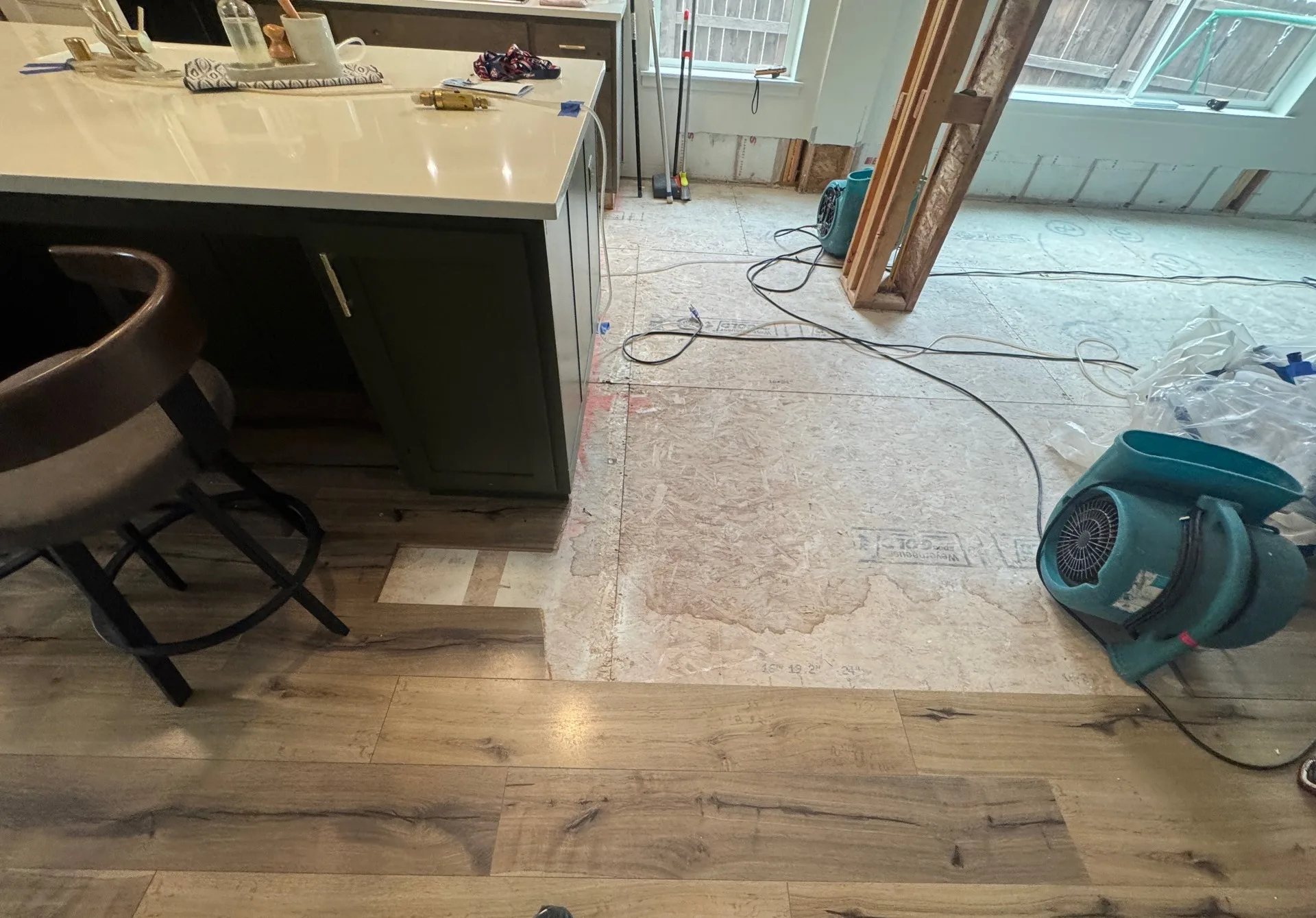
Burst Pipe Repair work by TIK Construction

Burst pipes — what's actually happening

A burst pipe is when a water supply line ruptures, releasing pressurized water into the structure of your home. The leak rate from a burst supply line — typically 50–80 PSI for residential plumbing — is dramatic: a half-inch supply line can release hundreds of gallons of water per hour until shut off.

The damage compounds in three directions: outward (water spreads across floors and through wall cavities), downward (water travels through subfloor and into ceilings below), and into hidden spaces (insulation, behind cabinetry, into adjacent rooms before being noticed). Most burst-pipe water damage is much larger than the visible surface suggests by the time a tech arrives — moisture meters and thermal imaging surface what's hidden.

Vancouver and Portland metro homes most commonly experience burst pipes during cold snaps when water inside unheated wall cavities, garage walls, and exterior crawl-space lines freezes and ruptures. Older homes (pre-1980 galvanized supply lines, copper that's age-thin) are more vulnerable. Newer homes can also burst when an exposed line in a mechanical room or unheated garage freezes overnight.


Common burst pipe causes we see

  • Frozen pipe failure during cold snaps

    Sustained sub-freezing temperatures cause water inside unheated wall cavities, garages, and exterior lines to expand and rupture the pipe. Most Vancouver burst-pipe events cluster around the year's coldest week.

  • Aging galvanized or copper supply lines

    Pre-1980 homes commonly have galvanized steel supply lines that corrode from inside; older copper can develop pinholes or thin walls. Both fail unpredictably, often without warning.

  • Excess water pressure

    Water pressure above 80 PSI stresses joints and connections. Failed pressure-reducing valves can let municipal pressure spike high enough to burst weak fittings.

  • Construction or renovation damage

    Nail and screw strikes during construction can leave a slow leak that fails completely months or years later. We see this regularly in homes that had recent remodel work.

  • Tankless water heater supply failures

    Newer Tankless heaters often install in unheated mechanical rooms or garages. The supply lines feeding them are vulnerable during cold weather.

Don't wait. Damage compounds with every hour.

60-minute response, day or night.

Our burst pipe response process

Burst pipes need a specific sequence: stop the water, extract, dry, demolish what can't be saved, rebuild. Skipping or rushing any step produces hidden mold weeks later.

  1. Hour 0–1

    Emergency dispatch and water shutoff

    We arrive on-site within 60 minutes. If you haven't already shut off the water main, the lead tech does it immediately. Dispatch text follows you to the door.

  2. Hour 1–4

    Source confirmation and extraction

    We identify the burst location — sometimes obvious, sometimes hidden behind drywall or in a slab. Water extraction begins with truck-mounted pumps. We document everything for insurance: photos, moisture readings, scope notes.

  3. Hour 4–24

    Hidden moisture mapping

    Moisture meters and thermal imaging map the actual extent of water spread — often two or three rooms beyond the visible damage. Equipment placement targets the hidden moisture zones.

  4. Days 1–7

    Structural drying

    Industrial dehumidifiers and air movers run continuously until materials meet IICRC S500 standards. Daily moisture checks adjust equipment placement to dry hot spots. Most burst-pipe drying takes 3–5 days.

  5. Days 5–10

    Demolition and rebuild

    Drywall too saturated to save (typically 12–24 inches above the burst location), swollen flooring, and contaminated insulation are removed. Then reconstruction: drywall, paint, flooring, trim — matched to existing finishes.

Prevention

How to prevent it next time

  • Insulate exposed pipes

    Foam pipe insulation in unheated walls, garages, and exterior runs prevents most freeze events. Worth the small investment — we see freeze-burst events drop dramatically in well-insulated homes.

  • Drip cold water during freezes

    Letting a single faucet drip during sub-freezing weather keeps water moving through the line. Moving water doesn't freeze as readily as still water.

  • Know your water main location

    If a burst happens, the difference between 5 minutes and 30 minutes of unrestricted flow is enormous. Walk the main shutoff with everyone in the home.

  • Replace aging galvanized supply

    Pre-1980 galvanized supply lines are reaching end-of-life across Vancouver and Portland. Replacement before failure costs less than restoration after.

Real reviews

What customers say about TIK's water damage work

4.9★ average from 50+ verified Google reviews

  • "After having a pipe burst in our rental home, TIK Construction and Restoration has done a phenomenal job mitigating the damage and communicating with us every step of the way. Elmer, their mitigation manager, has been especially thorough and precise to prevent any lasting damage to the home, and has been very thoughtful of protecting our belongings during this process. Isaac, another very nice gentleman and their director of operations, gave us a clear picture of what the whole process would look like and thoughtfully informed us of our options with our renter's insurance."

    Joel Jacobs

    Verified Google Review

  • "We called TIK when we woke up (on a weekend!) to a major leak in our living room from the upstairs tub. Elmer mobilized right away and got to us within a couple hours to begin the water mitigation. He is now helping us communicate with our insurance representative and take the next steps in the water restoration. We appreciate all the help we've gotten from TIK during this difficult event!"

    Grace D.

    Verified Google Review

  • "TIK Construction and Restoration did an amazing job restoring our home after a flood caused by a burst pipe upstairs. From start to finish, their team was professional, communicative, and easy to work with. They kept us informed throughout the entire process, answered all of our questions, and made what could have been a very stressful situation much smoother. The quality of their work really stood out—everything was done with attention to detail and care."

    Alex Volkov

    Verified Google Review

Insurance handled

We work directly with all major homeowner carriers. We document the damage, submit the claim within 24 hours, and bill direct so you pay only your deductible.

See carrier-specific claim details →

  • State Farm logo
  • Allstate logo
  • USAA logo
  • Liberty Mutual logo
  • Farmers logo
  • Travelers logo
  • American Family logo
  • Nationwide logo
  • Chubb logo
  • Progressive logo

Burst pipe FAQs

How fast does a burst pipe spread water through my home?

Fast — a half-inch supply line at typical residential pressure releases hundreds of gallons per hour. Multi-room flooding within 30 minutes is common. The first action is shutting off the water main, then calling us.

Will my insurance cover burst pipe damage?

Yes, in almost all cases. Sudden and accidental water damage from burst pipes is a core covered peril on every standard homeowner's policy. We document the cause and submit the claim — most are approved without dispute.

How long does burst pipe restoration take?

Total timeline 1–4 weeks depending on damage scope. Drying takes 3–5 days. Reconstruction 1–3 weeks for typical residential damage. Larger floods affecting multiple rooms can take 4–6 weeks total.

Why does drying take so long?

Materials look dry on the surface long before they're actually dry inside. Wood framing and drywall hold moisture deep in the structure where mold grows. We measure moisture content with calibrated meters and don't stop drying until levels meet IICRC S500 standards — typically 3–5 days for residential burst-pipe damage.

Will I need a separate plumber for the pipe repair?

Sometimes. We coordinate plumbing repair with licensed plumbers as part of the overall job — you don't manage two separate contractors. For the restoration and rebuild, we handle everything in-house.

Burst pipe right now? Call before damage spreads.

60-minute response. We extract, dry, and rebuild — all under one roof.

Available 24/7 · Day or night · Every day of the year

Get help with burst pipe repair

Send your info and we'll call within 30 minutes.

For emergencies, call us directly: (360) 938-4601

Call Now: (360) 938-4601