
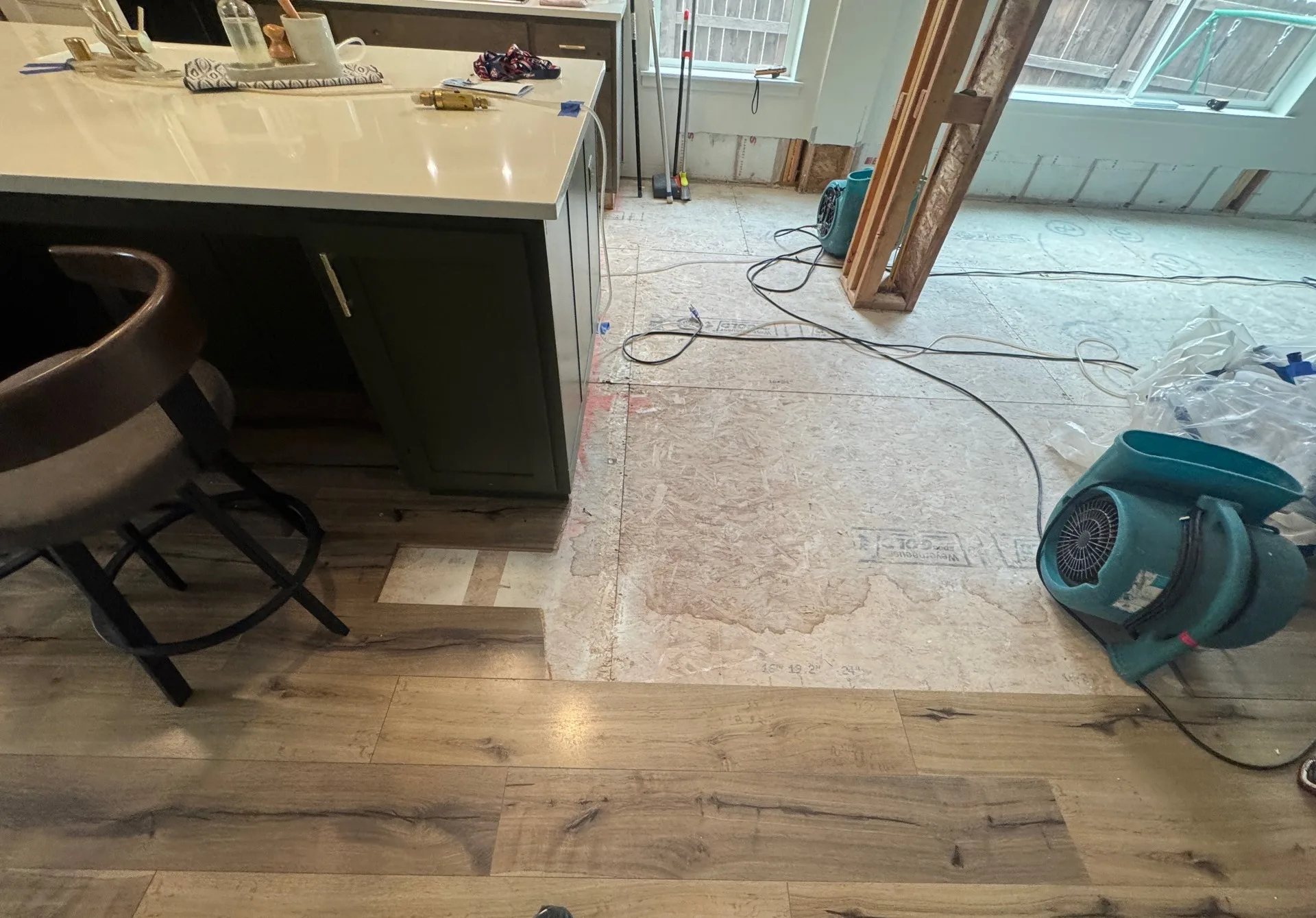
Appliance leaks — why they're worse than they look
Appliance leaks are deceptive because the visible water often doesn't reflect actual damage. A washing-machine supply hose that fails at 3am can release water for hours before discovery, soaking subflooring far beyond the visible kitchen or laundry-room floor. A dishwasher gasket failure releases water under the unit and into the cabinetry below, often with no visible symptom until cabinetry warps or kitchen flooring buckles.
Newer Vancouver and Portland homes (post-2000 construction) have multiple appliances on supply lines that have aged 15–25 years — washer hoses, dishwasher supplies, refrigerator ice-maker lines, water filter connections. Each is a potential failure point. Refrigerator ice-maker lines are particularly notorious: thin plastic tubing that fails without warning and runs continuously until the water main is shut off.
The damage profile is typically slow-discovery, hidden-moisture-heavy. By the time a homeowner notices the symptom, water has been spreading through subflooring, into adjacent rooms, and (in upstairs laundry rooms) through ceilings below. Restoration requires moisture mapping more than dramatic extraction.