What is fire damage restoration?
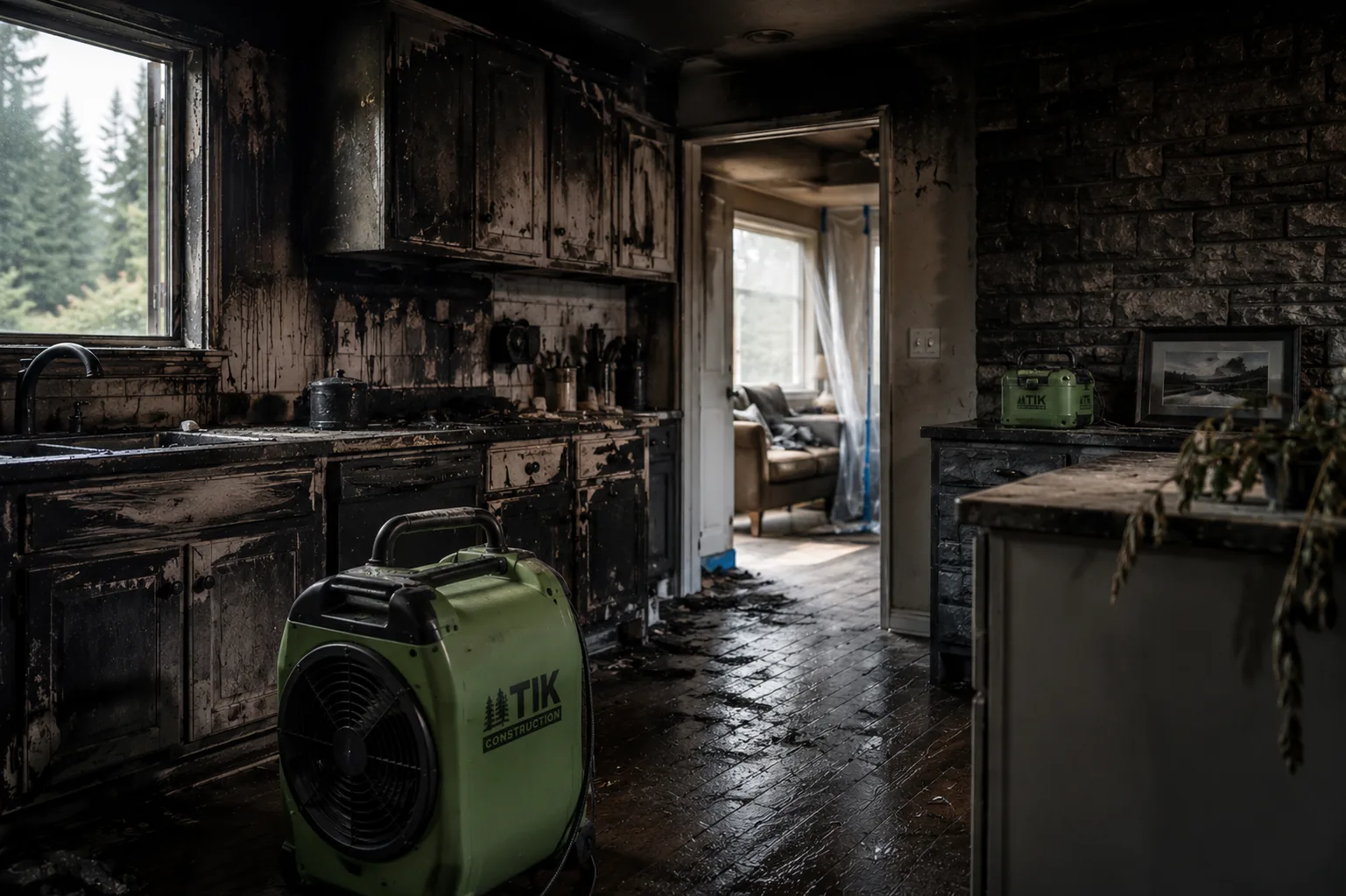
Fire damage restoration is the multi-phase process of returning a property to pre-fire condition after fire, smoke, and the water used to extinguish the fire have done their work. The fire itself is rarely the only problem — smoke residue infiltrates porous materials, soot is acidic and continues to corrode surfaces, and the water from suppression often produces secondary water damage and mold risk.
The work involves five phases. First, structural assessment — confirming the building is safe to enter and identifying load-bearing damage. Second, water extraction and drying — removing the firefighting water before it can cause further damage. Third, soot and smoke removal — cleaning surfaces with appropriate chemistry for the type of soot (wet smoke, dry smoke, protein, fuel oil). Fourth, odor remediation — using thermal fogging, hydroxyl generation, or ozone treatment to neutralize odor at the molecular level rather than masking it. Fifth, reconstruction — rebuilding the structural and finish materials that couldn't be saved.
Most fire restoration companies handle the cleanup and stop. They hand off the reconstruction to a separate general contractor — and the homeowner spends weeks coordinating two companies and two billing relationships during what's already the worst week of their life. TIK handles all five phases under one roof, with one timeline and one point of accountability.
Time matters in fire damage too, but for different reasons than water. Soot is acidic and continues to etch surfaces (metal, glass, fabric) for hours after the fire is out. Smoke odor settles deeper into porous materials with each passing day. The longer the affected materials sit, the more permanent the damage becomes. Rapid mitigation isn't a marketing slogan — it's the difference between salvageable and not.