
Black mold — what it is and what it signals
What people call black mold is usually Stachybotrys chartarum, a dark greenish-black mold that grows on cellulose materials — the paper facing of drywall, wood framing, ceiling tiles — when they stay wet for an extended period. Unlike faster common molds, Stachybotrys needs sustained moisture to establish. Finding it means the material hasn't just been damp; it's been chronically wet, often for weeks. That makes black mold less a cleaning problem and more a moisture diagnosis with a mold symptom.
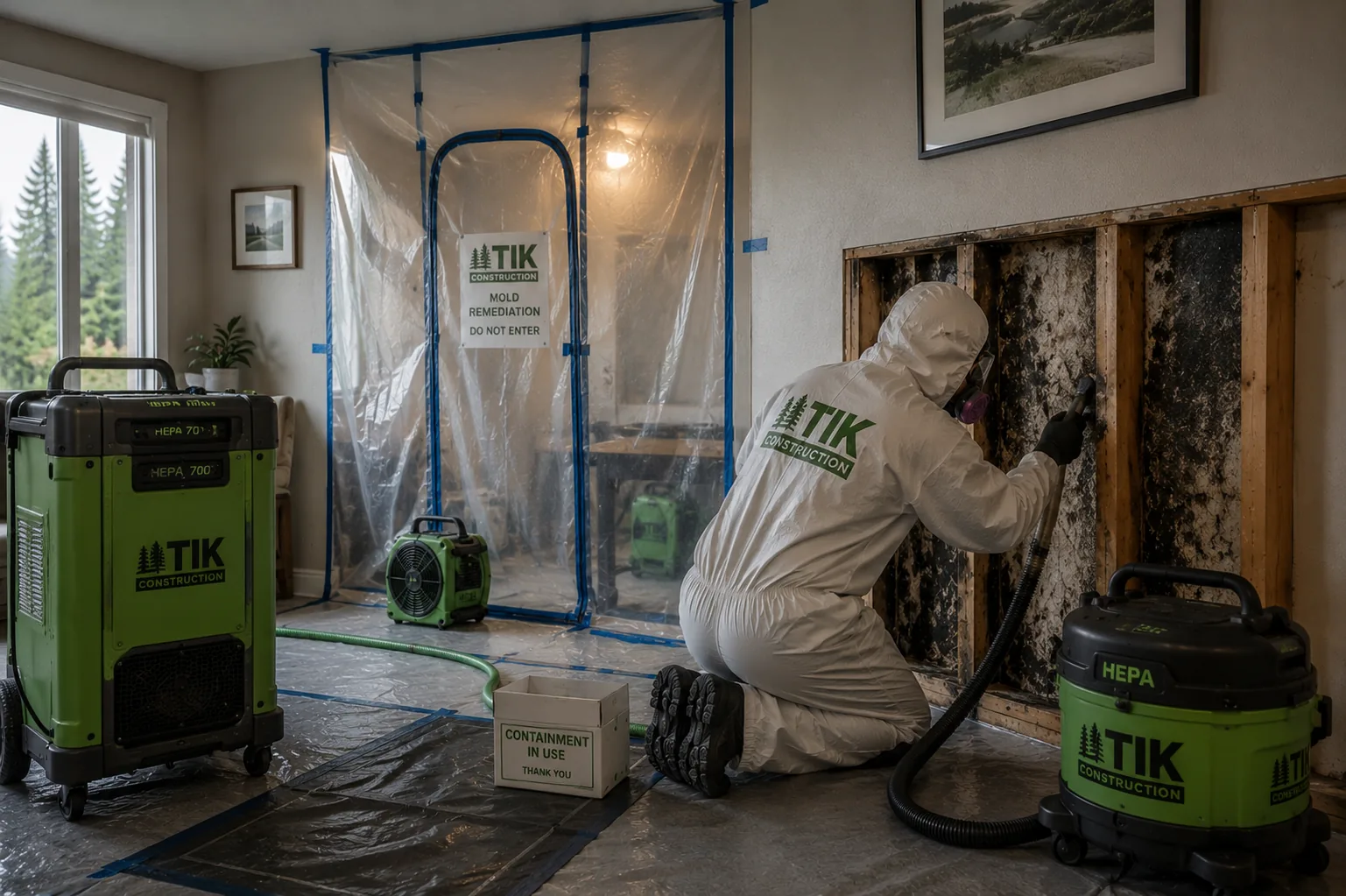
Not every dark mold is Stachybotrys — Cladosporium and some Aspergillus species also look dark, and only lab testing tells them apart. The practical answer matters more than the species: any significant mold growth on porous materials gets remediated the same disciplined way. Containment goes up first, with HEPA-filtered negative air so spores can't migrate to clean rooms. Contaminated porous materials are removed and bagged under containment. Remaining surfaces are HEPA-vacuumed and treated with antimicrobial. Then air samples are compared against outdoor controls before containment comes down — remediation isn't done until it's verified.
The Pacific Northwest grows mold well. Outdoor humidity in Vancouver and Portland regularly sits above 80 percent through fall and winter, and homes stay closed up for months, so interior moisture from showers, cooking, and laundry has nowhere to go. Mold can begin colonizing damp material in as little as 24–72 hours. Older homes with single-pane windows, marginal bathroom fans, and cool exterior wall cavities give it exactly the conditions it needs — which is why black mold behind bathroom walls and under window sills is one of our most common finds in Clark County housing stock.