
Bathroom mold — why this room grows it faster than any other
A single hot shower can push a bathroom's relative humidity well above 90 percent for several minutes, and that moisture has to go somewhere. In a bathroom with a strong exhaust fan run long enough, it leaves. In a bathroom with an undersized fan, one nobody switches on, or one vented into the attic instead of outside, it condenses on the coolest surfaces in the room — tile grout, the drywall around the tub surround, the wall behind a pedestal sink — and stays wet long enough for mold to establish.
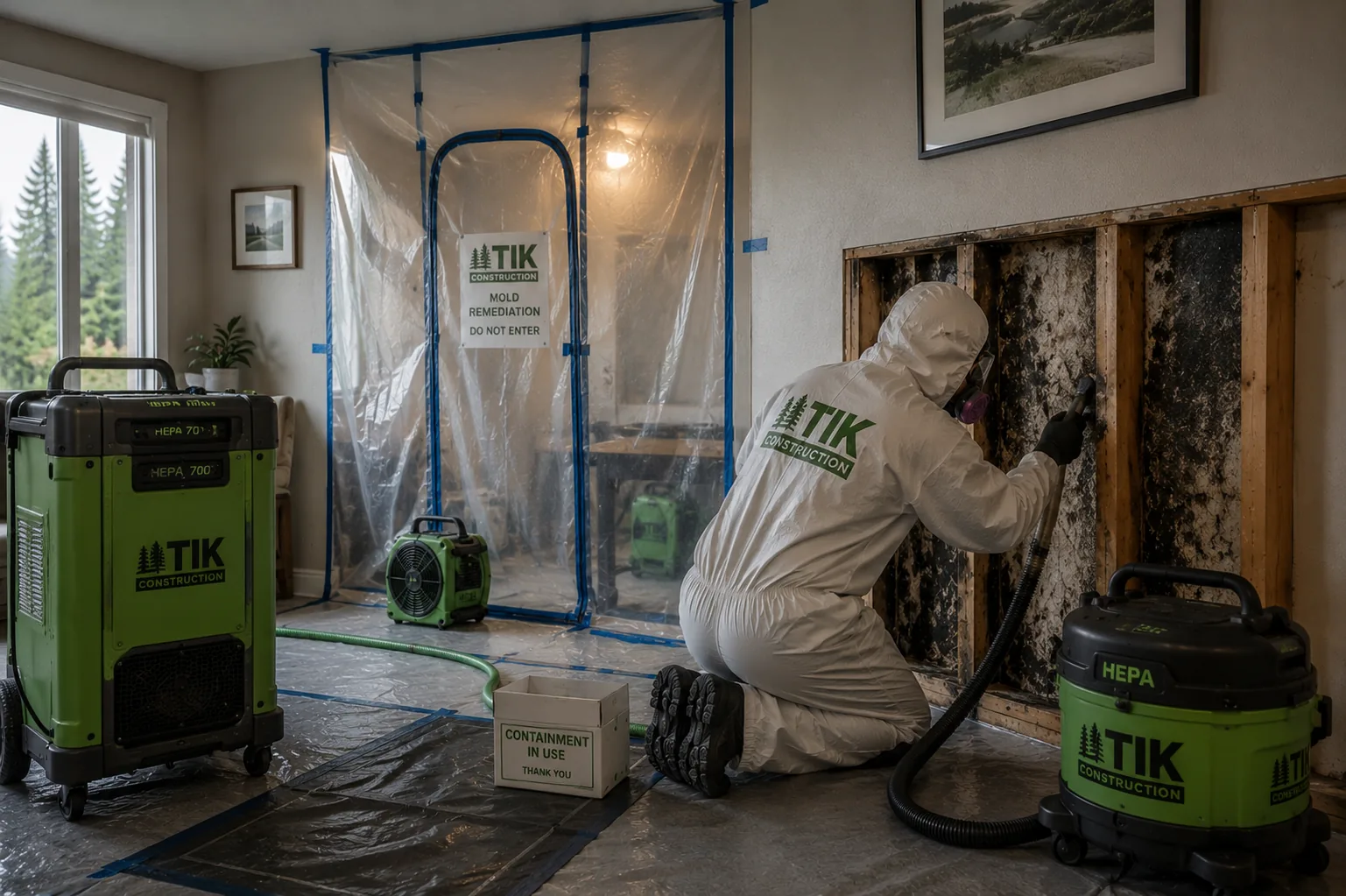
Grout and caulk are usually the first visible sign, because they're porous and sit directly in the splash zone. But surface mold on grout is often just the part you can see. The same moisture that colonizes grout lines regularly reaches the drywall behind a tub or shower surround, particularly where caulk has separated from the tile edge and let water track behind the wall board for months before a stain or soft spot gives it away.
Vancouver and Portland metro bathrooms compound the problem two ways. Older homes frequently have original exhaust fans sized for a much smaller code requirement than current standards call for, and many of those fans move less air after years of dust buildup than they did new. And the region's long, closed-up winter means whatever moisture a fan doesn't clear has nowhere to dilute to outside the house the way it might during a summer with open windows.