
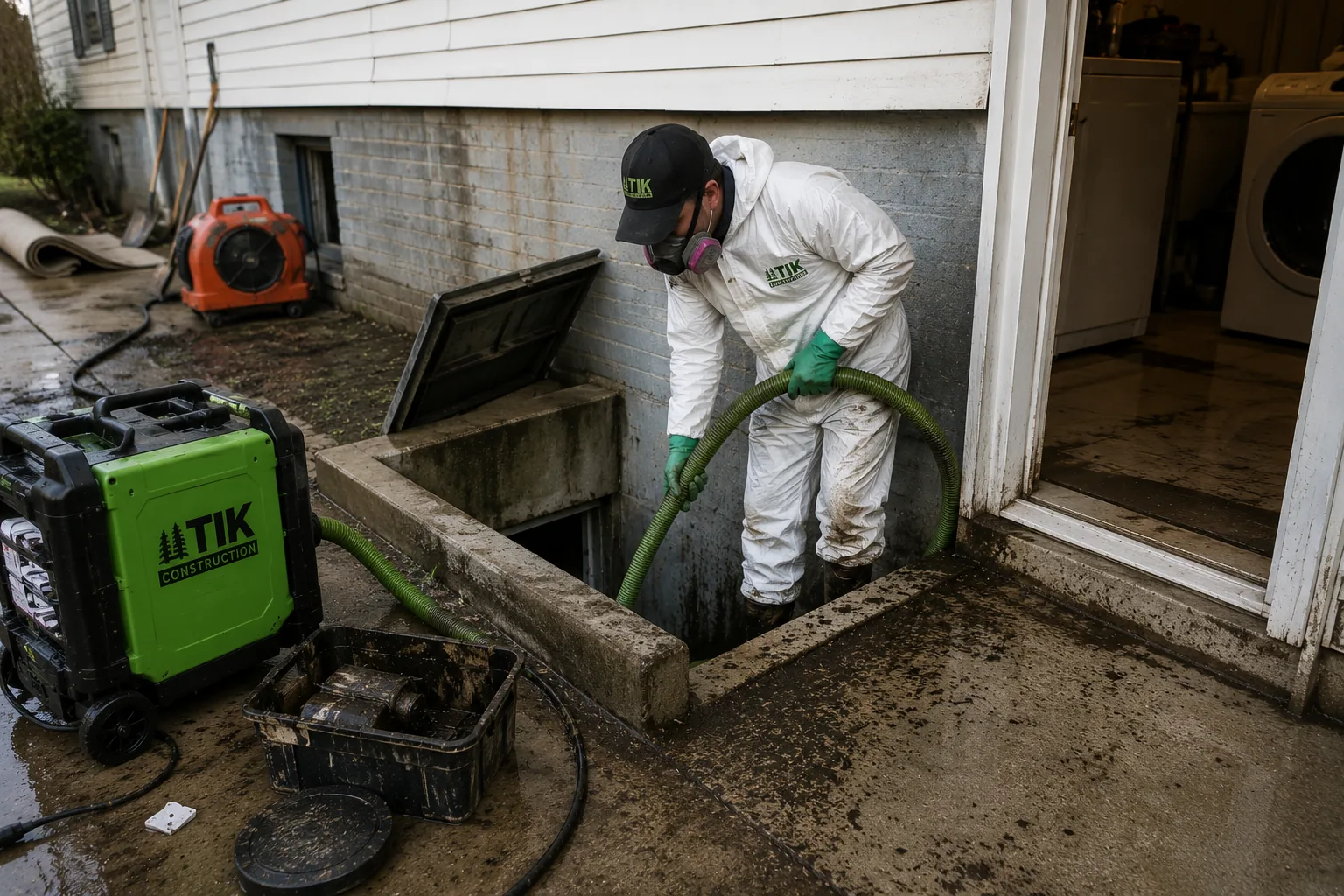
Sewage Cleanup in Happy Valley, OR: what we see locally
Happy Valley sits in Clackamas County about 12 miles southeast of Portland, built up the slopes of Mount Scott — an extinct volcanic cone — and Scouters Mountain, with Mount Talbert's 200-acre volcanic butte forming another high point inside the city. The land was originally settled in the mid-1800s and known as Christilla Valley, after early residents Christian and Matilda Deardorff, before the city incorporated under its current name in 1965.
Growth here has been dramatic and recent: population was under 1,400 in 1970, around 4,500 in 2000, and has since grown past 28,000 as master-planned subdivisions filled in the hillsides. That means Happy Valley's housing stock skews newer than almost anywhere else in the metro — most of it built within the last two decades on graded hillside lots, many with retaining walls and view orientations toward Mount Hood and the Cascades. Pleasant Valley and the Scouters Mountain area, on the city's growing edges, are still adding new-construction phases today.
The elevation and slope that give Happy Valley its views also shape its water exposure. Rather than the creek-adjacent flooding common in lower-lying metro suburbs, Happy Valley's hillside lots depend on cut-and-fill grading, retaining walls, and engineered stormwater systems to manage runoff — infrastructure that's still catching up with the pace of new construction in growth areas like Pleasant Valley. The city sits within the upper Johnson Creek watershed, which drains toward Milwaukie and Portland downstream, but the more immediate local issue is surface water and drainage around newly graded slopes rather than creek overflow at the property line.
Typical sewage cleanup scenario in Happy Valley: Happy Valley runs on separated sewer and stormwater systems with mostly newer PVC laterals, so backups from root intrusion are less common than in older metro neighborhoods. Growth areas like Pleasant Valley have seen regional sewer-capacity projects extended to keep pace with new subdivisions, and we occasionally see backups tied to that infrastructure still catching up with development.


