
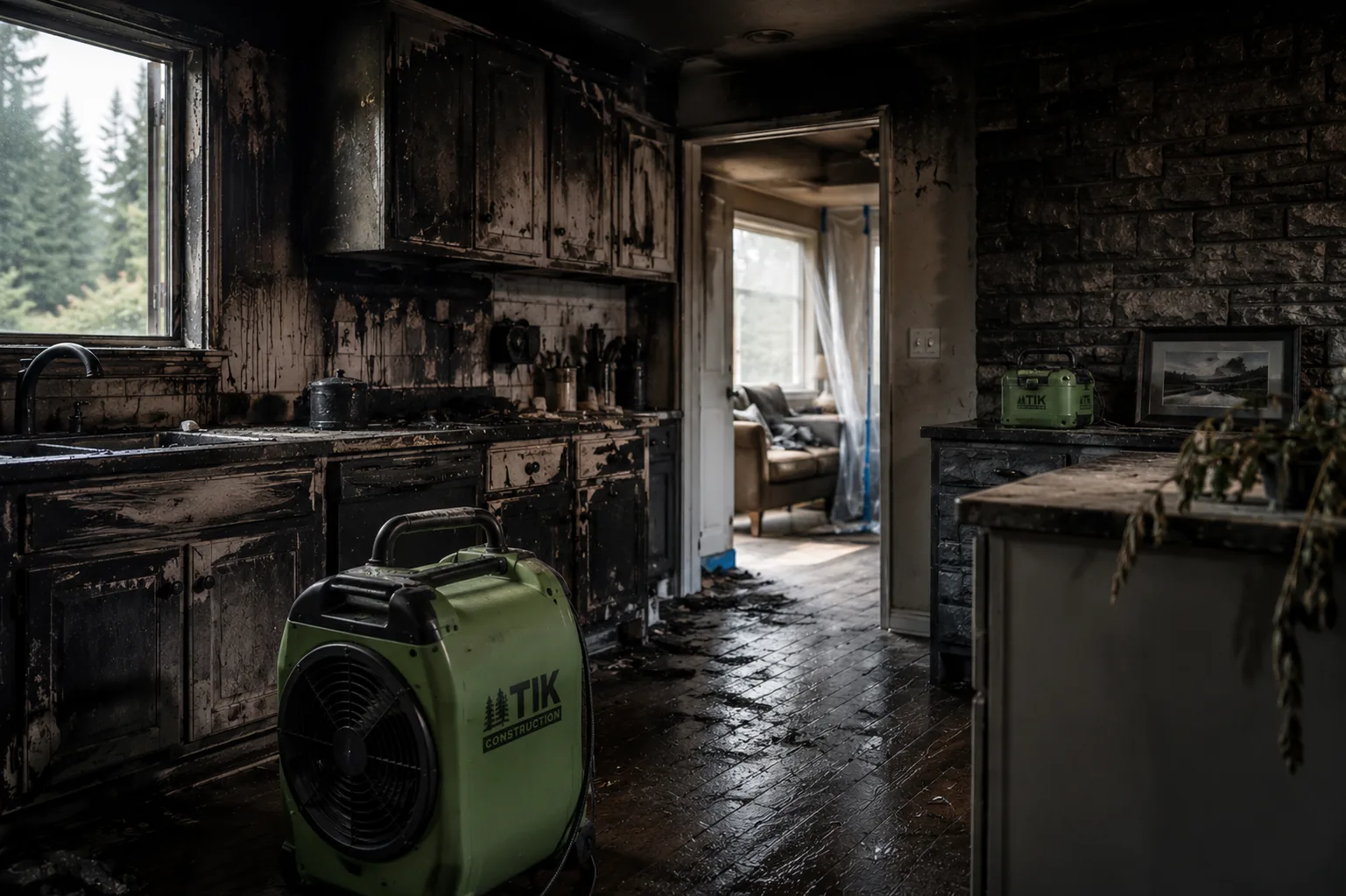
Smoke odor — why it outlasts the cleanup
Smoke odor isn't a smell floating in the air — it's residue physically bonded into porous materials. During a fire, hot smoke is driven into every path air can travel: wall cavities, attic insulation, carpet pad, upholstery, the paper face of drywall, and the entire duct system. Surface cleaning removes what you can reach. The odor you smell weeks later comes from the residue you can't.
That's why real odor removal works at the molecular level. Thermal fogging generates a fine deodorizing fog that penetrates materials the same way smoke did, reaching residue inside cavities and porous surfaces. Hydroxyl generators break down odor compounds in occupied spaces safely over several days. Ozone treatment works faster and stronger but requires the space to be vacant during treatment. The right tool depends on the odor severity, the materials involved, and whether you're living in the home — we choose accordingly, and we seal odor-saturated framing and subfloor before anything gets repainted.
Pacific Northwest conditions make lingering smoke odor harder to ignore. Vancouver and Portland homes stay closed up through the long wet season, so there's no months-of-open-windows dilution — trapped odor concentrates instead. Older housing stock with original plaster, exposed wood, and decades-old insulation absorbs and holds odor more than newer sealed construction. And regional wildfire smoke events some summers leave homes smelling smoky with no fire on the property at all.