TIK Construction

PUFFBACK CLEANUP · VANCOUVER WA + PORTLAND OR

Puffback Cleanup in Vancouver WA — Soot Cleared From Every Register

On-site within 60 minutes · Clark County + Portland metro

A puffback pushes oily soot backward through the furnace or flue instead of up the chimney, and the duct system carries it to every room with a register. TIK identifies the soot type, cleans walls, ceilings, and contents with the chemistry that soot requires, coordinates duct cleaning, and rebuilds anything too stained to save. Insurance billed direct.

  • 5.0 ★ · 50+ Google reviews
  • IICRC Certified
  • WA #TIKCOCI815RW · OR #229356
  • All Major Insurance
Puffback Cleanup by TIK Construction

Puffbacks — why one bad ignition coats the whole house

A puffback happens when a furnace burner misfires on startup, or a wood stove or fireplace downdrafts, and the resulting cloud of soot is forced backward into the duct system or out into the room instead of exiting through the flue. Oil furnaces produce the classic puffback: an ignition delay lets unburned fuel oil accumulate in the combustion chamber, and when it finally ignites, the small explosion blows soot through the heat exchanger and into the supply ducts. Gas furnaces and wood-burning appliances produce a milder version of the same problem.

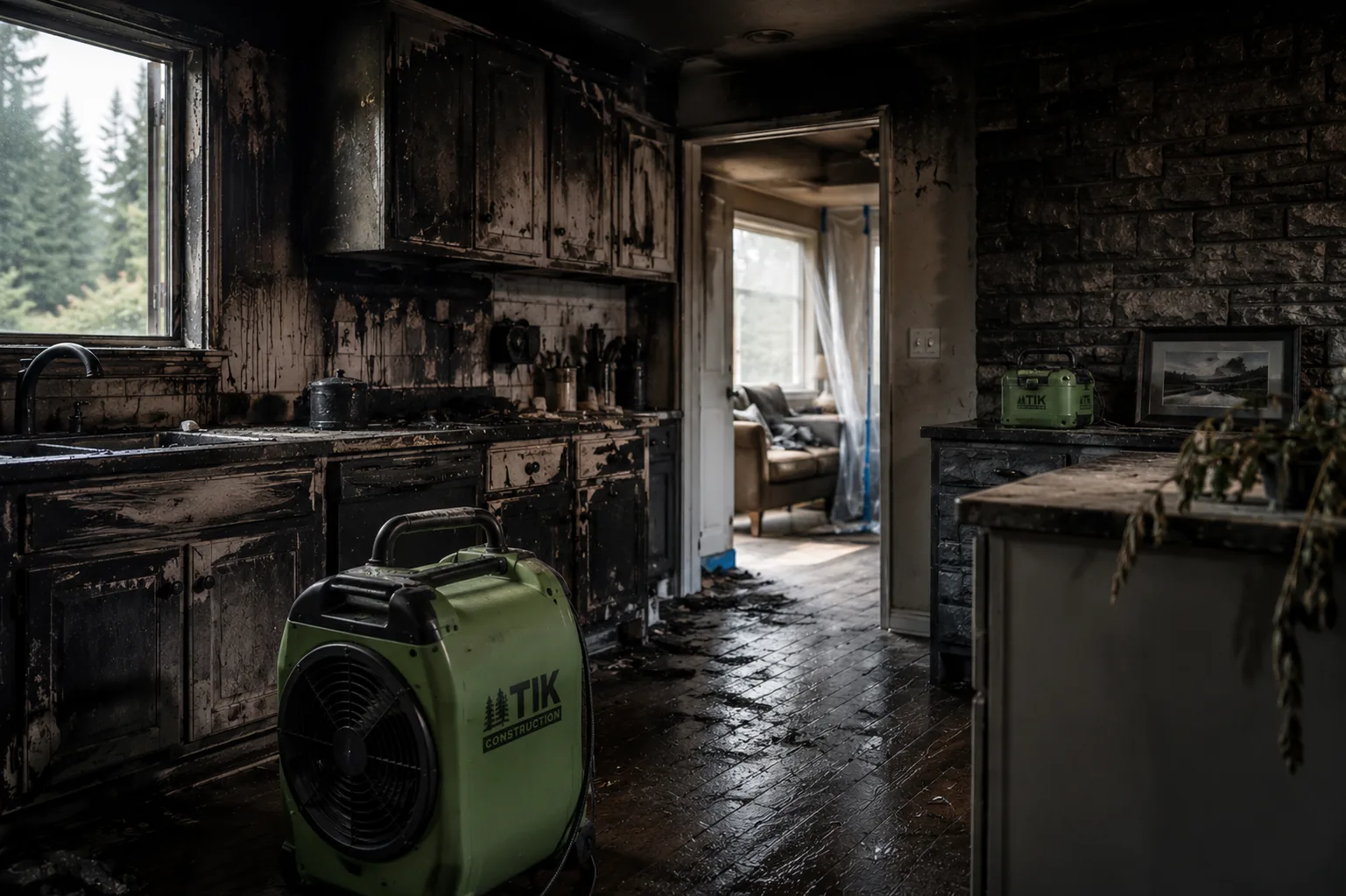
The reason a puffback damages an entire house rather than one room is the duct system itself. Once soot enters the return or supply plenum, every heating cycle after the event redistributes it to whatever room has a register open. A furnace puffback in the basement mechanical room routinely leaves visible soot on ceilings and walls two floors up, and homeowners often don't connect the mess to the furnace because the furnace room itself looks only lightly affected.

Fuel-oil and creosote soot behave differently from the smoke residue left by an open-flame fire. It's oilier, it stains faster on painted surfaces and fabric, and it carries a heavier, more persistent odor. Clark County and Portland-area homes with older oil furnaces or original ductwork are the calls we see most, along with wood-stove puffbacks during the winter burning season when a blocked flue or a sudden downdraft pushes creosote-laden soot back into the living space.


Common puffback causes we see

  • Oil furnace ignition delay

    A delayed ignition lets unburned fuel oil pool in the combustion chamber. When it lights, the small explosion forces soot backward through the heat exchanger and into the ductwork. This is the most common puffback we clean up.

  • Clogged or misadjusted burner nozzle

    A dirty or worn nozzle produces an uneven fuel spray that burns incompletely, generating excess soot even without a dramatic ignition event. Soot accumulates gradually until a puffback pushes a large amount through the ducts at once.

  • Blocked or undersized flue

    A flue partially blocked by creosote, a bird's nest, or debris can't vent normally. Pressure builds until smoke and soot reverse direction and enter the house instead of the chimney.

  • Wood stove and fireplace downdrafts

    A sudden gust or a cold, dense column of outside air can push down an active flue, forcing smoke and fine soot back into the room. Common during Clark County's wood-burning season, especially with older, less-sealed stoves.

  • Deferred furnace maintenance

    Furnaces that haven't been serviced in years are far more likely to misfire. Nozzle wear, dirty filters, and heat-exchanger buildup all raise puffback risk, and older homes with original oil systems carry more of this risk than newer gas installs.

Don't wait. Damage compounds with every hour.

We're on the way day or night.

Our puffback cleanup process

Puffback soot is oily and travels through the whole duct system, so cleanup has to cover every room a register reaches, not just the furnace area. Skipping the ducts or the odor step leaves the smell to return with the next heating cycle.

  1. Right away

    Dispatch and furnace shutdown

    We dispatch the moment you call. The furnace or stove stays off until it's been serviced or inspected, so it stops redistributing soot through every heating cycle while we assess the spread.

  2. On arrival

    Soot mapping room by room

    The lead tech traces which rooms have registers connected to the affected duct run and checks each one, including rooms that look clean at first glance. Findings are documented with photos for the insurance claim.

  3. Hour 4–24

    Dry soot removal

    Loose soot is lifted with HEPA vacuuming and dry chemical sponges before any wet cleaning starts. Puffback soot smears badly if wiped wet first, so this step protects surfaces that would otherwise stain permanently.

  4. Days 1–3

    Wet cleaning with degreasing chemistry

    Fuel-oil and creosote soot need stronger degreasing chemistry than ordinary house-fire smoke. Walls, ceilings, trim, and hard contents are cleaned section by section with cleaners matched to the soot type found during assessment.

  5. Days 2–5

    Duct cleaning and odor treatment

    We coordinate duct cleaning so the system stops recirculating residue, then treat lingering odor with thermal fogging or hydroxyl generation. Skipping the ducts is the top reason puffback odor returns weeks after a cleaning.

  6. Days 4–8

    Restoration and rebuild

    Ceiling texture, trim, and drywall too stained to clean are replaced. Paint uses stain-blocking primer so soot residue can't bleed through. Same crew handles cleanup and rebuild.

Prevention

How to prevent it next time

  • Service oil and gas furnaces annually

    An annual burner tune-up catches nozzle wear and ignition-timing issues before they produce a puffback. This is the single biggest prevention step for furnace-related events.

  • Sweep the chimney before burning season

    Creosote buildup and flue blockages are the leading cause of wood stove puffbacks. An annual sweep before Clark County's wood-burning season starts is inexpensive compared to a whole-house soot cleanup.

  • Replace furnace filters on schedule

    A clogged filter changes airflow through the system and can contribute to incomplete combustion. Regular filter changes are a small habit that reduces soot risk.

  • Know the smell of unburned fuel oil

    A faint oil smell near the furnace before any visible event is worth a service call. Catching ignition problems early avoids the puffback altogether.

Real reviews

What customers say about TIK's fire damage restoration work

5★ average from 50+ verified Google reviews

  • "TIK Construction exceeded our expectations! Their crew was professional, attentive to detail, and kept the project right on schedule. The finished work looks outstanding, and we couldn't be more pleased. We highly recommend them!"

    Mark Cherry

    Verified Google Review

  • "When any company owner has a goal such as that, that means they seek to do such a good job they can put their name to it. It also means he is looking to improve in any area that needs it. Being open to and asking 'is there anything I can improve on' means one is secure enough in who they are, open to suggestions and truly seeks to be the best out there. I recommend his company to anyone needing work on their home done. Restoration, Remodels, he can help you."

    Anne Marie Faulkner

    Verified Google Review

  • "Reliability and dependability are two extremely important details as a construction professional. I work in the restoration industry and have used TIK and his team for multiple projects that are always done on time and within budget. Andrew is great with communication and the quality of work is phenomenal."

    Chase Mesford

    Verified Google Review

  • "The team at TIK did such a great job with our home repair and restoration. They were communicative and very accommodating. They also did beautiful work. Highly recommend!"

    Jennifer Teng

    Verified Google Review

Insurance handled

We work directly with all major homeowner carriers. We document the damage, submit the claim within 24 hours, and bill direct so you pay only your deductible.

See carrier-specific claim details →

  • State Farm logo
  • Allstate logo
  • USAA logo
  • Liberty Mutual logo
  • Farmers logo
  • Travelers logo
  • American Family logo
  • Nationwide logo
  • Chubb logo
  • Progressive logo

Puffback cleanup FAQs

Why did soot from my furnace show up two floors away?

Because the duct system carries it. Once soot enters the supply plenum, every heating cycle pushes it to whatever room has a register open, regardless of where the furnace is located. We map the affected registers, not just the furnace room, before cleaning starts.

Will insurance cover puffback cleanup?

Yes, in most cases — a puffback is a sudden mechanical malfunction, and the resulting soot damage is typically covered as a fire-peril claim on standard homeowner's policies. We document the event and bill your carrier directly. You typically pay only your deductible.

Do I need the furnace serviced before it's used again?

Yes. We coordinate with an HVAC technician to service or repair the furnace as part of the job, since running it again without addressing the cause risks a repeat event. We handle the soot; the technician handles the mechanical fix.

Can puffback soot ruin my carpet and furniture?

It can, especially fabric and upholstery, which absorb the oily residue and hold the odor. Hard surfaces clean well with the right degreasing chemistry. We assess fabric items individually and coordinate specialty cleaning for pieces worth saving.

How long does puffback cleanup take?

Most puffback cleanups take 4–8 days depending on how many rooms the ducts reached and whether ceiling or drywall replacement is needed. Duct cleaning and odor treatment add a few days on top of surface cleaning.

Furnace or stove puffback? Don't run the system again yet.

Rapid emergency dispatch, day or night. Soot cleaned, ducts cleared, odor gone.

Available 24/7 · Day or night · Every day of the year

Get help with puffback cleanup

Send your info and we'll call you right back, day or night.

For emergencies, call us directly: (360) 938-4601

Call Now: (360) 938-4601