TIK Construction

SMOKE DAMAGE CLEANUP · VANCOUVER WA + PORTLAND OR · 24/7

Smoke Damage Cleanup in Vancouver WA — Soot Removed Before It Sets

On-site within 60 minutes · Clark County + Portland metro

Smoke damage keeps getting worse after the fire is out. Soot is acidic — it stains walls in hours, pits metal and etches glass over days, and settles deeper into fabric and finishes the longer it sits. TIK answers day or night, identifies the soot type, cleans each surface with the right chemistry, and rebuilds what can't be saved. One company through reconstruction. Insurance billed direct.

  • 5.0 ★ · 50+ Google reviews
  • IICRC Certified
  • WA #TIKCOCI815RW · OR #229356
  • All Major Insurance
Smoke Damage Cleanup by TIK Construction

Smoke damage — why it spreads farther than the fire

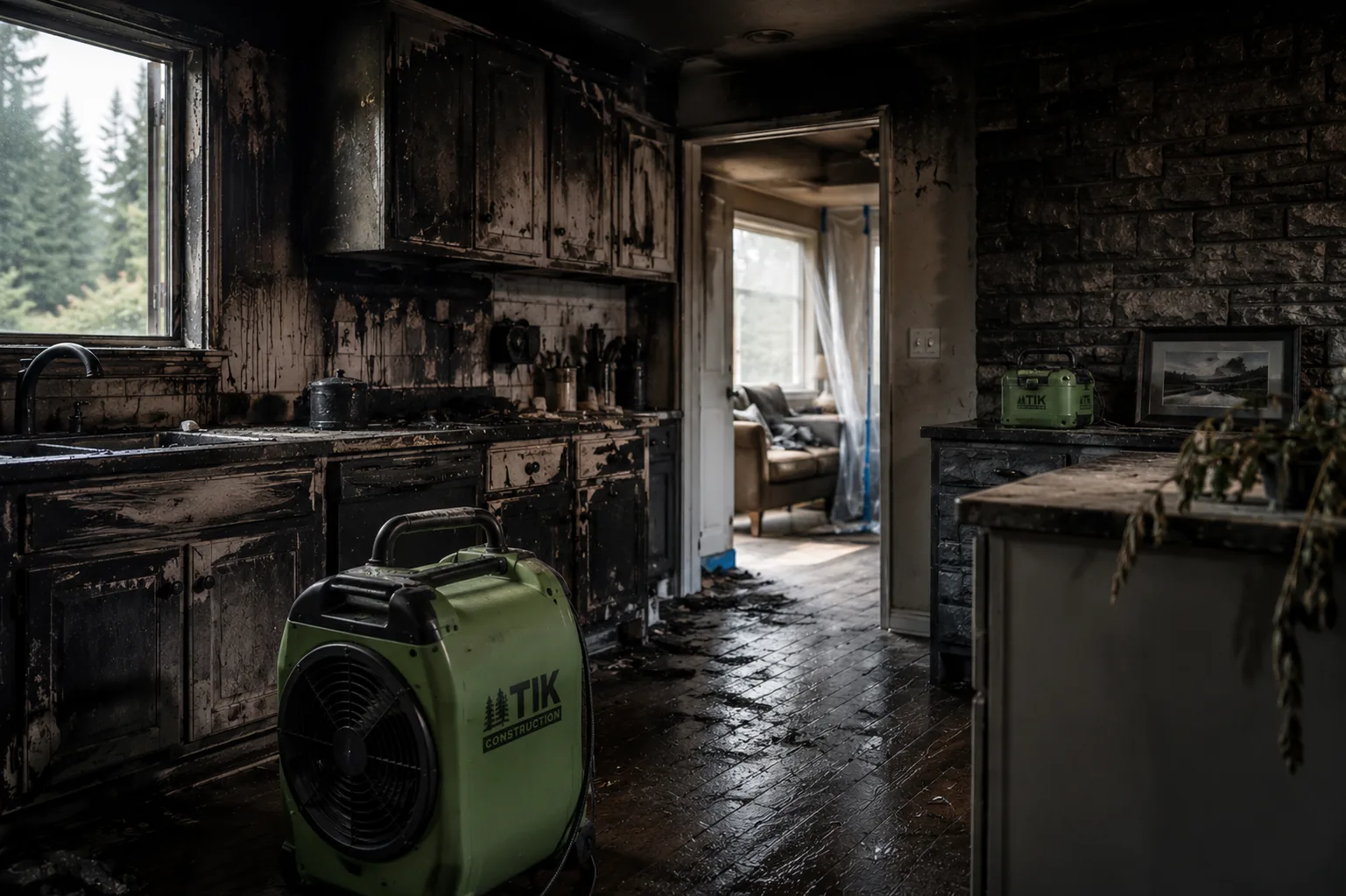
Smoke damage is a separate problem from flame damage, and it's usually the larger one. Smoke residue is acidic and chemically active — it discolors paint and plastics in a matter of hours, corrodes and pits metal fixtures over days, and permanently etches glass if left untreated. A fire contained to one room routinely leaves smoke residue through the entire home, because smoke follows air currents through doorways, wall cavities, and the HVAC system while the fire burns.

Not all soot is the same, and the difference determines the cleanup. Dry smoke from fast, high-temperature fires leaves a powdery residue that cleans relatively well. Wet smoke from slow, smoldering fires leaves a smeary, sticky residue that spreads if wiped with the wrong cleaner. Protein residue from kitchen fires is nearly invisible but coats surfaces with a film that carries a strong odor. Fuel-oil soot from furnace puffbacks behaves differently again. Using generic cleaners on the wrong soot type sets stains permanently — which is why our IICRC FSRT-certified techs test the residue before cleaning anything.

Vancouver and Portland metro housing stock shapes the smoke damage we see. Kitchen fires — the most common house fire — hit older homes hard, where open stairwells and original forced-air ducting carry protein smoke to upper floors fast. Homes built before the 1970s often have original wiring that produces smoldering electrical fires with heavy wet-smoke residue inside wall cavities. And wood stoves and fireplaces, common across Clark County, produce puffback events that coat living rooms in fine soot without any open flame.


Common smoke damage sources we see

  • Kitchen fires and stovetop flare-ups

    The most common source. Even a small grease fire that's out in seconds produces protein residue — a near-invisible film that coats cabinets, walls, and ceilings and carries a persistent odor. Generic cleaners don't touch it; enzymatic chemistry does.

  • Electrical fires in aging wiring

    Older Vancouver and Portland homes with original wiring produce smoldering electrical fires that generate heavy wet smoke inside wall cavities before they're discovered. The residue is sticky and smeary, and much of it hides where you can't see it.

  • Chimney and wood stove puffbacks

    A blocked flue or downdraft pushes smoke and creosote-laden soot back into the living space. Common during Clark County's wood-burning season. The soot is oily and stains aggressively.

  • Furnace puffbacks

    A misfiring oil or gas furnace can discharge soot through the duct system, distributing fine residue to every room with a register. The furnace needs service; the house needs professional soot removal.

  • Nearby fires and regional wildfire smoke

    A fire next door — or a heavy wildfire smoke event, which the Pacific Northwest now sees some summers — can drive smoke into a home through vents and gaps. Residue and odor settle into soft goods and finishes even though nothing on the property burned.

Don't wait. Damage compounds with every hour.

We're on the way day or night.

Our smoke damage cleanup process

Smoke cleanup has a strict order: protect what soot is actively damaging, remove loose residue dry, then wet-clean with chemistry matched to the soot type. Doing it out of order — or with the wrong cleaner — sets stains and drives odor deeper.

  1. Right away

    Dispatch and soot assessment

    We dispatch the moment you call. The lead tech identifies the soot type — dry, wet, protein, or fuel-oil — and maps how far residue traveled, including into rooms that look clean. Everything is photographed and documented for the insurance claim.

  2. On arrival

    Protect at-risk surfaces

    Acidic soot attacks metal, marble, stone, and glass fastest. We wipe and protect these surfaces first, before full cleaning begins, to stop pitting and etching. HVAC is shut down so the system stops circulating residue.

  3. Hour 4–24

    Dry soot removal

    Loose residue comes off dry — HEPA vacuuming and dry chemical sponges lift soot without smearing it. This step matters most on wet smoke, where a damp rag turns a cleanable surface into a permanent stain.

  4. Days 1–3

    Wet cleaning with matched chemistry

    Each surface gets the cleaner its soot type requires — enzymatic cleaners for protein residue, degreasers for oily soot, milder chemistry for painted drywall. Walls, ceilings, trim, cabinetry, and hard contents are cleaned section by section.

  5. Days 3–5

    Odor treatment and sealing

    Smoke odor lives in porous materials, not on surfaces. We use thermal fogging or hydroxyl generation to neutralize it at the molecular level, and seal framing or subfloor that absorbed smoke before any repainting.

  6. Days 5–10

    Restoration and rebuild

    Materials too damaged to clean — scorched drywall, melted trim, heavily saturated carpet — are removed and rebuilt. Repainting uses stain-blocking primer so residue never bleeds through. Same crew, one timeline.

Prevention

How to prevent it next time

  • Keep working smoke alarms on every floor

    Earlier detection means a smaller fire and dramatically less smoke spread. Test monthly, replace batteries yearly, replace the units every ten years.

  • Service the furnace annually

    Puffbacks come from misfiring burners and blocked heat exchangers. An annual service visit catches the conditions that cause them before soot ends up in every room.

  • Sweep the chimney before burning season

    Creosote buildup and flue blockages cause puffbacks and chimney fires. If you burn wood through a Clark County winter, an annual sweep is cheap insurance.

  • Never wipe soot with a wet rag

    If a fire happens, resist the urge to clean. Wet-wiping wet smoke smears it into the surface permanently. Leave residue alone until it's been identified.

Real reviews

What customers say about TIK's fire damage restoration work

5★ average from 50+ verified Google reviews

  • "TIK Construction exceeded our expectations! Their crew was professional, attentive to detail, and kept the project right on schedule. The finished work looks outstanding, and we couldn't be more pleased. We highly recommend them!"

    Mark Cherry

    Verified Google Review

  • "When any company owner has a goal such as that, that means they seek to do such a good job they can put their name to it. It also means he is looking to improve in any area that needs it. Being open to and asking 'is there anything I can improve on' means one is secure enough in who they are, open to suggestions and truly seeks to be the best out there. I recommend his company to anyone needing work on their home done. Restoration, Remodels, he can help you."

    Anne Marie Faulkner

    Verified Google Review

  • "Reliability and dependability are two extremely important details as a construction professional. I work in the restoration industry and have used TIK and his team for multiple projects that are always done on time and within budget. Andrew is great with communication and the quality of work is phenomenal."

    Chase Mesford

    Verified Google Review

  • "The team at TIK did such a great job with our home repair and restoration. They were communicative and very accommodating. They also did beautiful work. Highly recommend!"

    Jennifer Teng

    Verified Google Review

Insurance handled

We work directly with all major homeowner carriers. We document the damage, submit the claim within 24 hours, and bill direct so you pay only your deductible.

See carrier-specific claim details →

  • State Farm logo
  • Allstate logo
  • USAA logo
  • Liberty Mutual logo
  • Farmers logo
  • Travelers logo
  • American Family logo
  • Nationwide logo
  • Chubb logo
  • Progressive logo

Smoke damage cleanup FAQs

Will my insurance cover smoke damage cleanup?

Yes — smoke damage is part of the fire peril on every standard homeowner's policy, even when the flames never touched your property (a neighboring fire, for example). We document the residue, scope the cleanup, and bill your carrier directly. You typically pay only your deductible.

Why can't I just clean the soot myself?

Because soot type determines the method, and the wrong method makes it permanent. Wet smoke smears when wiped. Protein residue is invisible until you clean around it and the outline appears. Household cleaners set stains that professional chemistry would have removed. The safest move is not touching it until it's been identified.

The fire was small — why does the whole house smell and look dirty?

Smoke follows air movement, not the fire. Convection pushes it through doorways, up stairwells, and into the HVAC system, which distributes residue to every room with a register. A ten-minute kitchen fire routinely leaves residue on three floors. That's why we assess the whole home, not just the fire room.

How long does smoke damage cleanup take?

Most smoke and soot cleanup takes 5–10 days depending on how far residue spread and how much material needs replacement rather than cleaning. Jobs with significant rebuild — replaced drywall, cabinetry, flooring — run longer. We give you an honest timeline after the assessment.

Do the air ducts need to be cleaned too?

Usually, yes. If the HVAC system ran during or after the fire, soot is inside the ducts and will recirculate every time the system starts. We include duct assessment in the scope and coordinate duct cleaning as part of the same job.

Can my furniture, clothes, and electronics be saved?

Much of it, if cleanup starts quickly. Hard-surface furniture and many fabrics restore well with the right chemistry. Electronics need assessment — acidic residue corrodes circuit boards over time. We coordinate contents cleaning and pack-out with specialty vendors as part of the claim.

Soot is still damaging your home right now.

Rapid emergency dispatch, day or night. Tested, cleaned, and rebuilt — under one roof.

Available 24/7 · Day or night · Every day of the year

Get help with smoke damage cleanup

Send your info and we'll call you right back, day or night.

For emergencies, call us directly: (360) 938-4601

Call Now: (360) 938-4601