TIK Construction

Real project · Vancouver, WA · May 2026

A hot water line leaking under the house — found, dried, and rebuilt

This Vancouver home had a hot water line failing in the crawl space — the kind of leak that runs silently under the floor while the water heater quietly works overtime. Our job file on this loss runs from the emergency call through completed reconstruction, both phases closed.

  • From our job records
  • Customer details private
  • Licensed WA + OR
  • 24/7 response
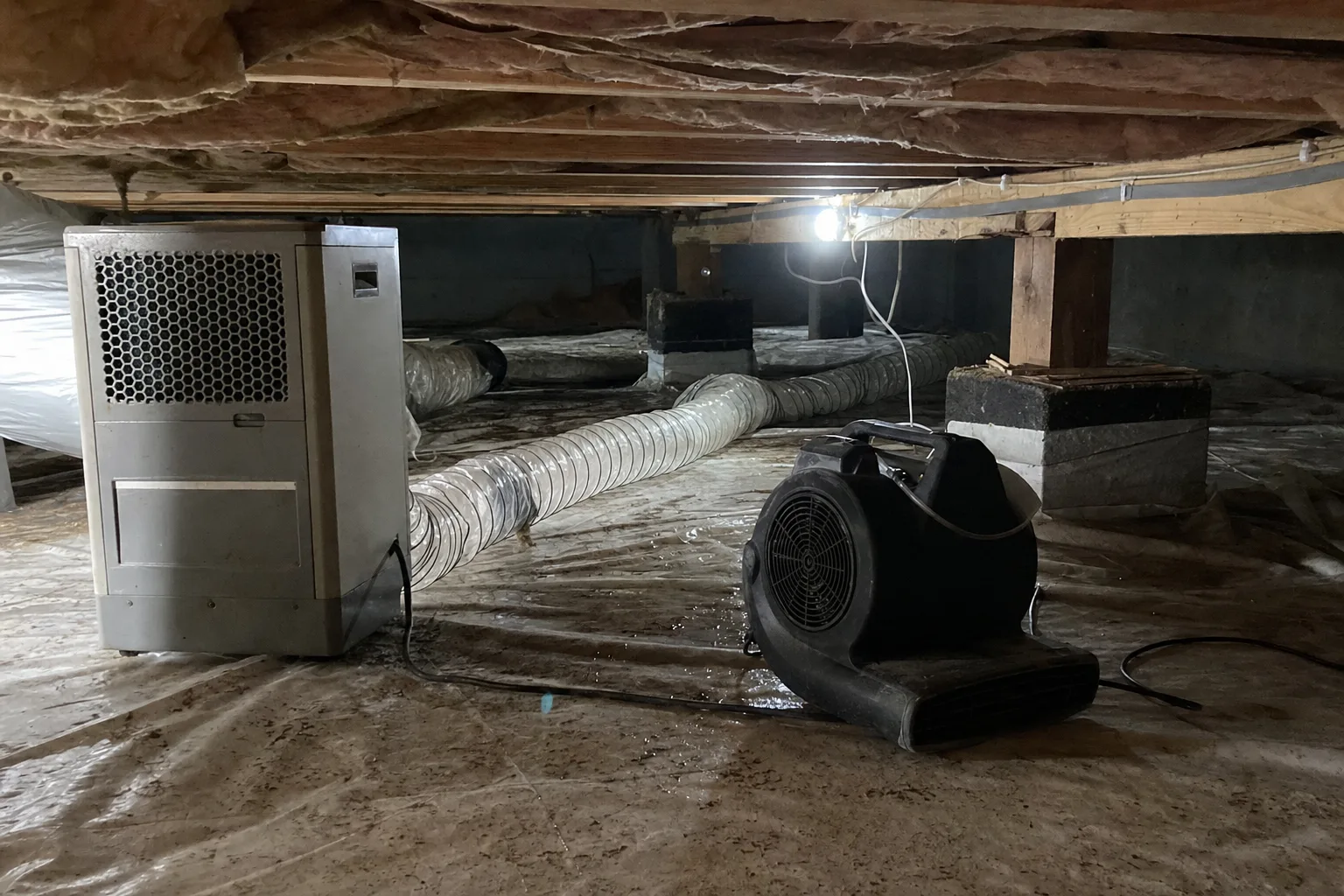
Drying equipment and dehumidification ducting staged in a residential crawl space after a water line leak

Illustrative imagery — project photo galleries are being digitized.

The project at a glance

Location
Vancouver, Washington
Cause of loss
Hot water line leak — crawl space
Project type
Residential water damage
Mitigation opened
May 20, 2026
Scope
Emergency mitigation + reconstruction
Job status
Both phases completed & closed

Documented from TIK Construction job records. Customer details stay private — the work is what we show.

What happened

Hot-side supply leaks are the quietest water losses a house can have. A cold water line leak often announces itself — pressure drops, a ceiling stain, a puddle. A hot line leaking under the house just bleeds heated water into the crawl space, and the first symptoms show up on the utility bill and at the tap: hot water that runs out too fast, a water heater that never seems to stop running.

By the time a crawl space leak is discovered, the space under the floor has usually been wet for a while. Fiberglass insulation between the joists soaks up water and sags, holding moisture directly against the subfloor. In a climate like ours — where crawl spaces sit damp for half the year anyway — a heated water source under the house is exactly how you accelerate rot and mold if it isn't handled quickly and completely.

This homeowner called TIK, and the loss went into our system on May 20, 2026 as an emergency water mitigation. It left our system with two phases closed: the mitigation that dried the structure, and the reconstruction that put the affected areas back together. One company, one file, no handoff.
How the project ran

Dated from the job file — this is the actual sequence, not a brochure.

  1. May 20, 2026

    Emergency call — mitigation opened

    The loss came into our system as an emergency water job. Crew dispatched to locate the source, stop the water, and begin extraction under the house.

  2. Late May 2026

    Crawl space dry-out

    Saturated insulation removed, drying equipment placed in the crawl space, and moisture readings in the framing and subfloor logged until they reached dry standard.

  3. May–June 2026

    Reconstruction phase

    The rebuild ran as its own documented phase on the same job file — restoring what the mitigation had to remove, without waiting on a second contractor to fit us into their schedule.

  4. Final status

    Both phases closed

    Mitigation and reconstruction are both completed and closed in our records — the definition of done we hold every project to.

Water under your Vancouver home right now? Call — we answer day or night.

Fast response across Clark County and the Portland metro.

The work, phase by phase

Phase 1 — Emergency mitigation under the house

Crawl space water losses are physically miserable work, which is exactly why they get half-done when the wrong crew shows up. Doing it right means getting under the house: extracting standing water, pulling out every piece of saturated insulation rather than leaving it to drip onto the vapor barrier, and setting drying equipment where it actually moves air across wet framing — not just parking a fan at the access hatch.

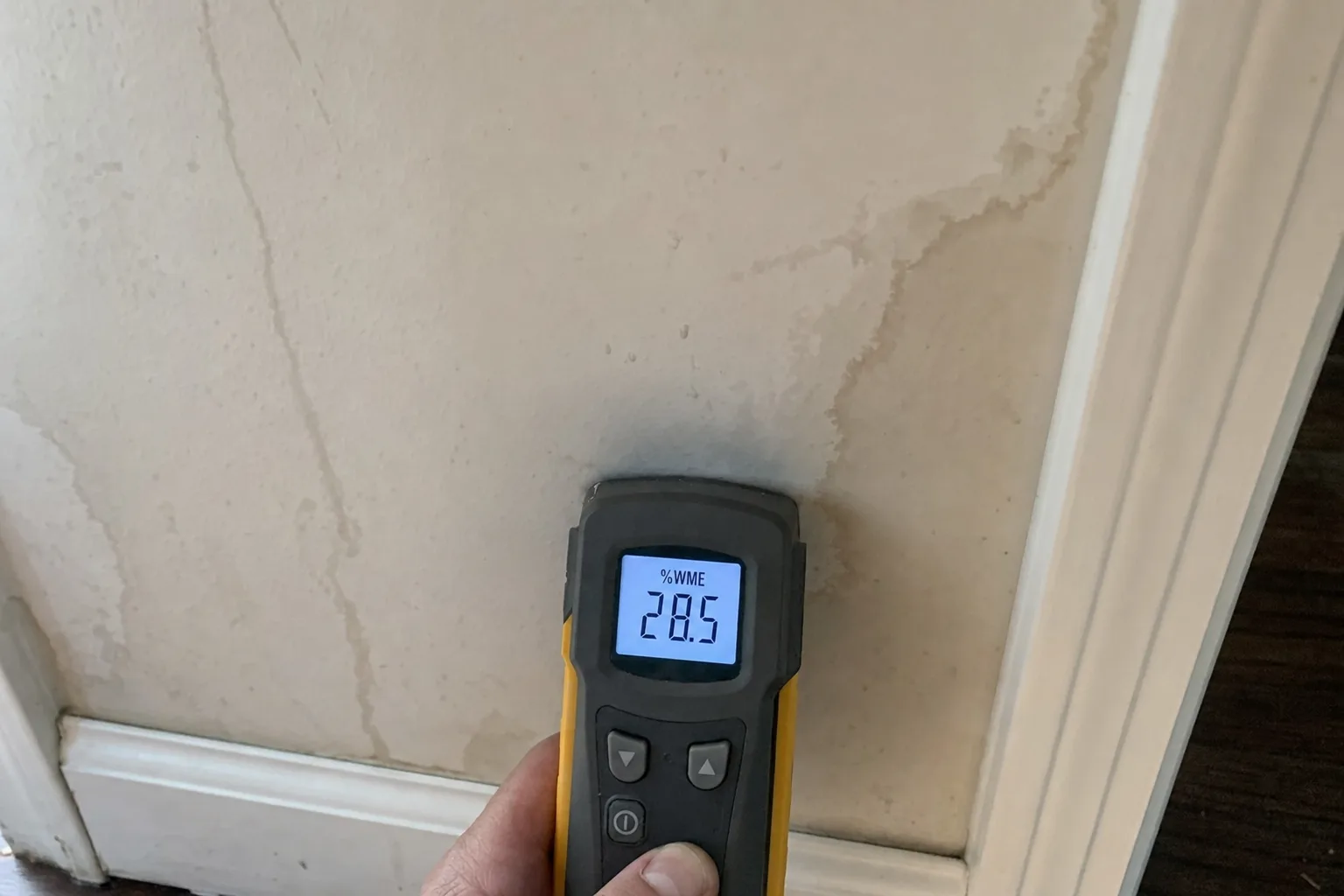
Moisture meter reading being taken on water-stained framing during dry-out documentation
Illustrative imagery — project photo galleries are being digitized.

Phase 2 — Verified drying, documented

You can't eyeball 'dry' in a crawl space. We log moisture readings in the joists and subfloor against dry-standard targets, and drying equipment stays until the numbers say done. That documentation matters twice: it's what an insurance carrier wants to see, and it's what protects the homeowner from a mold problem surfacing two months later.

Phase 3 — Reconstruction on the same job file

Once the structure was dry, the same company rebuilt what the loss and the dry-out had taken. That's the part of restoration where most companies hand you a business card and disappear — mitigation-only outfits dry the house and leave the rebuild to whoever you can find. TIK runs reconstruction as a phase of the same project, and this job's rebuild is closed in the same file it started in.

Why this matters

A hot water line leak costs you twice — once for the water, once for the energy heating it — and it does its damage in the least-visited part of the house. The difference between a dried-and-rebuilt crawl space and a structural rot problem is almost entirely response speed and drying discipline.

If you suspect a leak under your house

  • Trust the indirect symptoms

    Hot water running out fast, the water heater cycling constantly, a warm patch of floor, a water bill jump, a musty smell — any two of those together deserve a look under the house today, not next month.

  • Kill the water, then the damage

    If you find water under the house, shut off the main supply valve (or the water heater's cold-water inlet if the leak is clearly on the hot side). Stopping the flow is the single most valuable thing you can do before help arrives.

  • Don't crawl in yourself

    A flooded crawl space can hide electrical hazards, waterlogged insulation overhead, and contaminated standing water. Discovery is your job; entry is ours.

  • Insist on moisture documentation

    Whoever dries your crawl space should be able to show you moisture readings, not just point at equipment. Undocumented drying is how crawl spaces come back with mold — and how insurance claims get disputed.

Real reviews

What homeowners say about working with TIK

5★ average from 50+ verified Google reviews

  • "After having a pipe burst in our rental home, TIK Construction and Restoration has done a phenomenal job mitigating the damage and communicating with us every step of the way. Elmer, their mitigation manager, has been especially thorough and precise to prevent any lasting damage to the home, and has been very thoughtful of protecting our belongings during this process. Isaac, another very nice gentleman and their director of operations, gave us a clear picture of what the whole process would look like and thoughtfully informed us of our options with our renter's insurance."

    Joel Jacobs

    Verified Google Review

  • "We called TIK when we woke up (on a weekend!) to a major leak in our living room from the upstairs tub. Elmer mobilized right away and got to us within a couple hours to begin the water mitigation. He is now helping us communicate with our insurance representative and take the next steps in the water restoration. We appreciate all the help we've gotten from TIK during this difficult event!"

    Grace D.

    Verified Google Review

  • "TIK Construction and Restoration did an amazing job restoring our home after a flood caused by a burst pipe upstairs. From start to finish, their team was professional, communicative, and easy to work with. They kept us informed throughout the entire process, answered all of our questions, and made what could have been a very stressful situation much smoother. The quality of their work really stood out—everything was done with attention to detail and care."

    Alex Volkov

    Verified Google Review

  • "Careful and skilled. I'm very happy with the workmanship of this job—reconstruction of main bathroom walls and floor after a flood. Enjoying my "new" bathroom in my 100-year-old house."

    S. Zane

    Verified Google Review

  • "TIK restored my laundry room after a leak damaged the flooring and walls. They did a fantastic job — above and beyond what was required. Always a good feeling to have things fixed right. Thank you TIK!"

    Ron Howard

    Verified Google Review

  • "Isaac and his crew did an outstanding job restoring our master bathroom! They were all very reliable, and professional and their workmanship was excellent! Isaac is an exceptional project manager. He took a lot of stress off our shoulders by providing guidance and resources for finding materials. He made regular visits to check up on the progress and to keep the project on track. The final project exceeded our expectations."

    Valorie Adler

    Verified Google Review

Questions homeowners ask about losses like this

How do you dry a crawl space after a water line leak?

Soaked insulation and debris come out first — wet fiberglass doesn't dry, it just holds water against the subfloor. Then we place low-profile air movers and a dehumidifier sized for the space, and track moisture readings in the framing until they hit dry-standard numbers. Depending on how long the leak ran, that typically takes 3–5 days.

Is a hot water line leak covered by homeowner's insurance?

A sudden supply-line failure is the classic example of 'sudden and accidental' water damage, which standard policies typically cover. What's usually not covered is the plumbing repair itself — insurance pays to fix what the water damaged, not the pipe that failed. We document everything to carrier standards either way.

How would I even know my crawl space is flooding?

Usually indirectly: the water heater running constantly, hot water running out fast, a warm spot on the floor, a jump in the water or electric bill, or a musty smell you can't place. Hot-side leaks are the quietest — the water disappears under the house instead of showing up on a ceiling. If any of those symptoms show up together, look under the house or have someone do it.

Does a wet crawl space always turn into a mold problem?

Not if it's dried fast and completely. Mold needs sustained moisture — a crawl space that gets professionally dried within days of the leak, with wet insulation removed, usually never develops one. A crawl space that stays damp for weeks is a different story. Speed is the whole game.

Your home could be the next project we finish.

A real person answers day or night.

Available 24/7 · Day or night · Every day of the year

Not an emergency? Tell us what happened

Send your info and we'll call you right back, day or night.

For emergencies, call us directly: (360) 938-4601

Call Now: (360) 938-4601