TIK Construction

Real project · Vancouver, WA · July 2026

Water through the ceiling — stopped, opened up, and dried

A Vancouver homeowner called with one of the most common emergencies in our job files: water coming through the ceiling. This page walks through how the loss actually ran — from the July 15 emergency call to completed structural drying, with the rebuild scoped on the same job file.

  • From our job records
  • Customer details private
  • Licensed WA + OR
  • 24/7 response
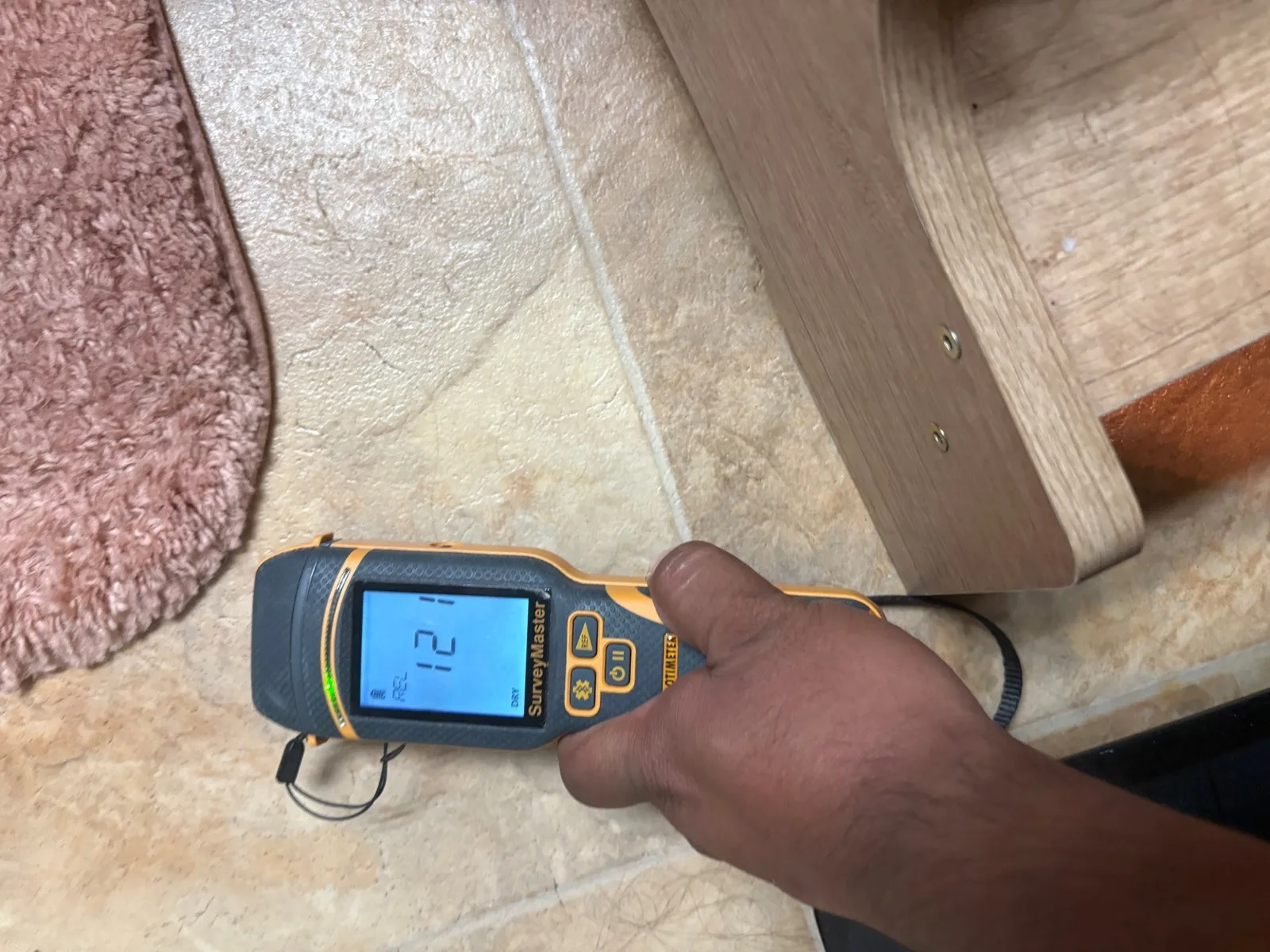
Moisture meter reading on the upstairs bathroom floor where the ceiling leak originated

The project at a glance

Location
Vancouver, Washington
Cause of loss
Ceiling leak — water from above
Project type
Residential water damage
Mitigation opened
July 15, 2026
Mitigation status
Completed — in final billing
Reconstruction
Scoped July 30 on the same file

Documented from TIK Construction job records. Customer details stay private — the work is what we show.

What happened

A ceiling leak is never a ceiling problem — it's a problem somewhere above the ceiling, using the drywall as its exit. Upstairs bathrooms are the usual suspects: a failed supply line, a toilet seal, a shower pan past its life. The stain you see is the last stop of a path that runs through subfloor, insulation, and joist cavity first.

That's what makes ceiling leaks deceptively destructive. By the time a stain shows, the cavity above it has already taken the real soaking — and drywall holds that story badly. It stains, sags, and eventually lets go all at once. The difference between a repair and a collapse is usually measured in hours of response time.

This loss came into our system on July 15, 2026 as an emergency water mitigation in Vancouver. The mitigation phase — source tracing, controlled demolition of what couldn't be saved, and structural drying of the cavity — is completed and in final billing. On July 30, the reconstruction phase was scoped on the same job file, so the rebuild picks up exactly where the dry-out left off, with the same company holding both ends.
How the project ran

Dated from the job file — this is the actual sequence, not a brochure.

  1. July 15, 2026

    Emergency call — water through the ceiling

    The loss entered our system as an emergency water job. First priorities on a ceiling leak are always the same: stop the source, relieve trapped water safely, and protect the room below.

  2. Mid-July 2026

    Trace, open, dry

    The leak path was traced to its source above the ceiling. Compromised material was removed, and drying equipment ran in the cavity with moisture readings logged until the structure hit dry standard.

  3. July 30, 2026

    Reconstruction scoped

    With the structure dry, the rebuild was scoped and estimated as its own phase on the same job file — ceiling, finishes, and paint, ready to run without re-explaining the loss to a new contractor.

Water coming through your ceiling in Vancouver? Call now — we answer day or night.

Fast response across Clark County and the Portland metro.

The work, phase by phase

Phase 1 — Stop the water, save the ceiling that can be saved

The emergency phase of a ceiling leak is triage: kill the source, drain trapped water in a controlled way instead of letting the drywall choose the moment, and make fast keep-or-remove calls with a moisture meter. Wet drywall that can be dried in place stays; saturated, sagging material and soaked insulation above it come out immediately.

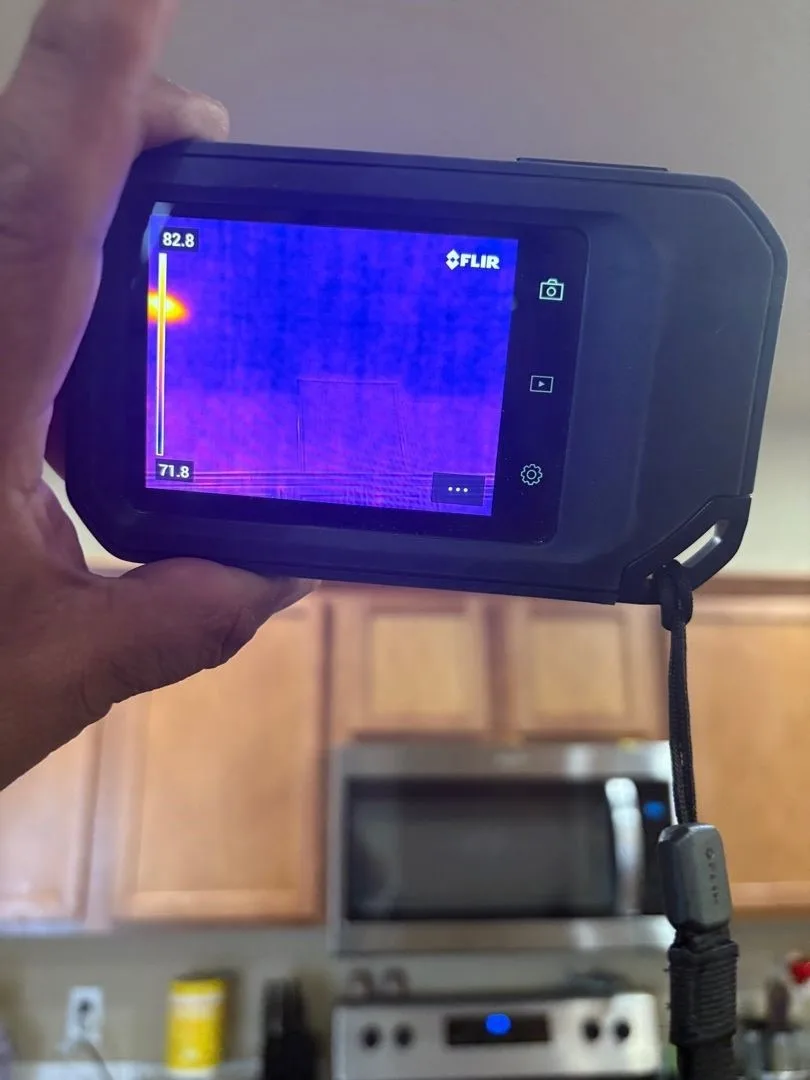
Thermal imaging camera showing hidden moisture in the ceiling during leak diagnosis

Phase 2 — Dry the cavity, not just the surface

The visible ceiling is the least important thing to dry. The joist cavity above it — framing, subfloor edges, remaining insulation — is where moisture hides and where mold starts if drying stops at the paint layer. Equipment stays until logged readings in the cavity hit dry-standard numbers, and that log becomes part of the insurance documentation.

Phase 3 — Rebuild scoped on the same file

Because TIK is a full-cycle restoration contractor, the reconstruction phase was scoped into the same project the moment drying finished — no gap where the homeowner shops for a drywall contractor while living under an open ceiling. Estimate, scope, and loss history all live in one file.

Why this matters

Ceiling leaks punish slow responses more than almost any other water loss — gravity keeps working, drywall keeps weakening, and the wet cavity above keeps feeding mold. Fast source control plus verified cavity drying is what turns a potential ceiling collapse into a repair.

If water is coming through your ceiling

  • Shut the water off first

    If anything upstairs could be the source — bathroom, laundry, water heater in the attic — shut the fixture valve or the main. Every minute of flow adds square footage to the loss.

  • Relieve a bulging ceiling on purpose

    A sagging bulge is trapped water. Put a bucket under the low point and open a small relief hole so it drains on your terms. It feels wrong; it's right — a controlled hole beats a collapsed panel.

  • Don't trust a dried stain

    A stain that 'dried on its own' means the surface dried. The insulation and framing above it hold moisture far longer, and that's where mold starts — usually invisible until it isn't.

  • Photograph everything early

    Wide shots of the room, close-ups of the stain and any water, and the source if you find it. Timestamped photos from the first hour are the strongest documentation your insurance claim will ever have.

Real reviews

What homeowners say about working with TIK

5★ average from 50+ verified Google reviews

  • "After having a pipe burst in our rental home, TIK Construction and Restoration has done a phenomenal job mitigating the damage and communicating with us every step of the way. Elmer, their mitigation manager, has been especially thorough and precise to prevent any lasting damage to the home, and has been very thoughtful of protecting our belongings during this process. Isaac, another very nice gentleman and their director of operations, gave us a clear picture of what the whole process would look like and thoughtfully informed us of our options with our renter's insurance."

    Joel Jacobs

    Verified Google Review

  • "We called TIK when we woke up (on a weekend!) to a major leak in our living room from the upstairs tub. Elmer mobilized right away and got to us within a couple hours to begin the water mitigation. He is now helping us communicate with our insurance representative and take the next steps in the water restoration. We appreciate all the help we've gotten from TIK during this difficult event!"

    Grace D.

    Verified Google Review

  • "TIK Construction and Restoration did an amazing job restoring our home after a flood caused by a burst pipe upstairs. From start to finish, their team was professional, communicative, and easy to work with. They kept us informed throughout the entire process, answered all of our questions, and made what could have been a very stressful situation much smoother. The quality of their work really stood out—everything was done with attention to detail and care."

    Alex Volkov

    Verified Google Review

  • "Careful and skilled. I'm very happy with the workmanship of this job—reconstruction of main bathroom walls and floor after a flood. Enjoying my "new" bathroom in my 100-year-old house."

    S. Zane

    Verified Google Review

  • "TIK restored my laundry room after a leak damaged the flooring and walls. They did a fantastic job — above and beyond what was required. Always a good feeling to have things fixed right. Thank you TIK!"

    Ron Howard

    Verified Google Review

  • "Isaac and his crew did an outstanding job restoring our master bathroom! They were all very reliable, and professional and their workmanship was excellent! Isaac is an exceptional project manager. He took a lot of stress off our shoulders by providing guidance and resources for finding materials. He made regular visits to check up on the progress and to keep the project on track. The final project exceeded our expectations."

    Valorie Adler

    Verified Google Review

Questions homeowners ask about losses like this

Water is coming through my ceiling right now. What do I do first?

Kill the water if you can — the fixture shutoff if you know the source is a bathroom above, otherwise the main supply valve. Move what's under the drip, put down a container, and if the ceiling is bulging, don't stand under it. A controlled relief hole through the drywall at the low point of the bulge (a screwdriver works) lets trapped water drain into a bucket instead of collapsing the whole panel. Then call.

Does the whole ceiling have to come down?

Not always. The decision is made with a moisture meter, not by eye. Drywall that got wet but can be dried in place is dried in place; drywall that's saturated, sagging, or has wet insulation sitting on top of it comes out. What never works is painting over the stain and hoping — the cavity above stays wet and grows mold.

Is ceiling water damage covered by insurance?

If the cause is sudden and accidental — a supply line failure, an overflowed fixture, a burst pipe — the resulting damage is typically covered by standard homeowner's policies. Slow long-term seepage is often excluded. We document the loss to carrier standards and bill insurance directly when a claim applies.

How long does drying a ceiling take?

Typically 3–5 days once the source is stopped. Air has to move through the cavity above the ceiling, not just across the visible surface — which is why professional drying uses cavity drying setups and moisture logging rather than a box fan pointed upward.

Your home could be the next project we finish.

A real person answers day or night.

Available 24/7 · Day or night · Every day of the year

Not an emergency? Tell us what happened

Send your info and we'll call you right back, day or night.

For emergencies, call us directly: (360) 938-4601

Call Now: (360) 938-4601