Wind and tree damage — what a Pacific Northwest windstorm does to a house
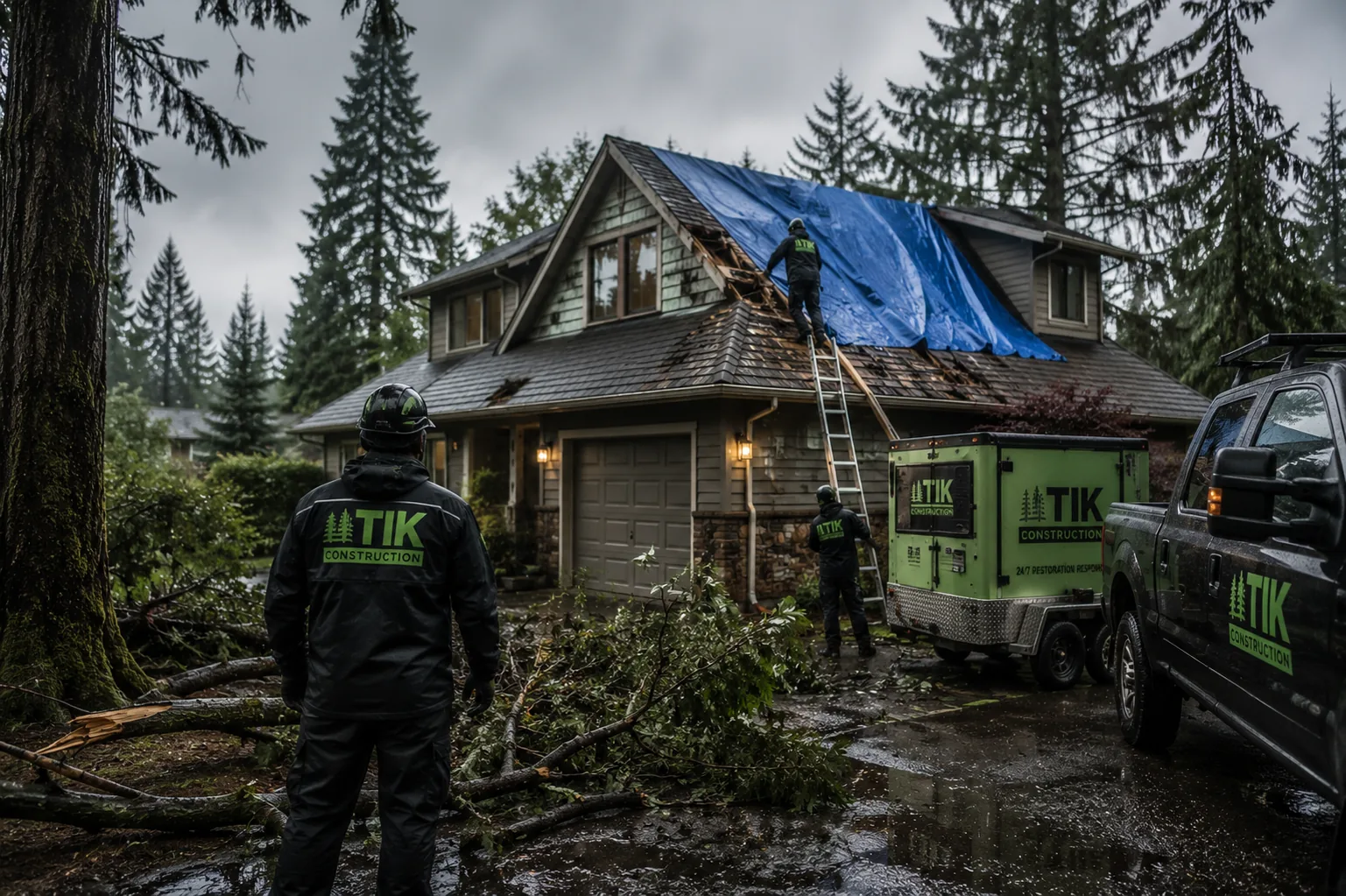
Pacific Northwest windstorms come with a specific damage profile because of what's growing around most homes here. Douglas fir and big-leaf maple can reach well over a hundred feet, and both are prone to limb failure or full uprooting in sustained high wind, especially in saturated winter soil that no longer anchors roots well. A falling limb through a roof is a common call; a full mature tree across a house is less common but far more serious, and it's not unusual to see both after the same windstorm across a neighborhood.
The damage from a tree strike is rarely limited to the impact point. A limb or trunk through the roof breaches the weather barrier, and every hour of continued rain afterward sends more water into the attic, ceiling, and walls below. Wind alone, without a tree involved, tears shingles, ridge caps, and siding loose in ways that look minor from the ground but leave the same open path for water. Either way, the sequence that matters most is stopping the water first and dealing with everything else after.
Because a fallen tree is a hazard as well as a repair job, the work usually involves more than one trade. A licensed arborist safely removes the tree or the hazardous remainder of it, especially when it's resting on the structure under tension. As a general contractor licensed in Washington and Oregon, TIK coordinates that removal, then handles the tarping, structural assessment, water mitigation, and rebuild as one continuous project instead of the homeowner managing separate companies for each piece.