
TIK Construction

SEPTIC OVERFLOW CLEANUP · VANCOUVER WA + PORTLAND OR · BIOHAZARD CERTIFIED

Septic Overflow Cleanup in Vancouver WA — Contained and Decontaminated

A failed septic system can back sewage up into the house through the lowest drains, or surface in the yard over a saturated drain field. Either way it's Category 3 contamination. TIK arrives in full PPE, contains the affected area, removes contaminated materials under IICRC S540 protocols, and restores the structure and grounds. Insurance billed direct where the cause is covered.

  • IICRC Certified
  • Licensed WA + OR
  • All Major Insurance
  • 24/7
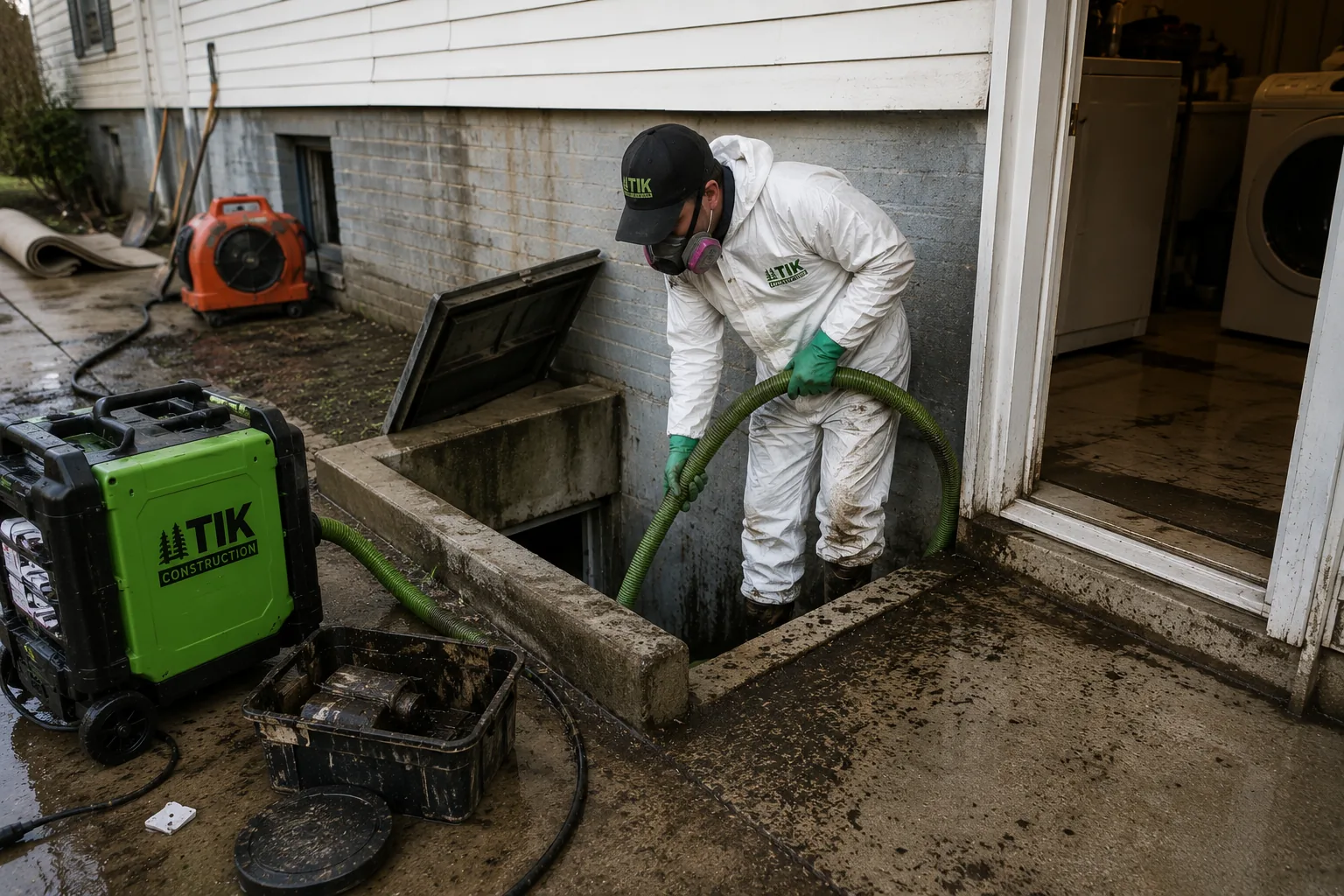
Septic Overflow Cleanup work by TIK Construction

Septic overflow — a system problem, not just a mess

A septic overflow happens one of two ways. Inside the house, a septic system that's full, clogged, or has a failed pump can back wastewater up through the lowest drains and fixtures the same way a municipal sewer backup does — and the health hazard is identical, because it's the same Category 3 contamination regardless of which system produced it. Outside, a saturated or failing drain field can surface wastewater in the yard, which is a property and environmental problem even when it never reaches the house.

Homes on septic across Clark County and the rural fringes of the Portland metro rely on the drain field to disperse treated effluent into the soil. During the region's wet season, ground saturation from sustained rain can reduce how much additional water the field can absorb, which is when marginal systems are most likely to surface or back up. A system that's handled the household fine for years can fail during the wettest stretch of winter simply because the ground itself has nowhere left to send the water.

The cleanup discipline follows the contamination level, not the plumbing type. Porous materials that absorbed the overflow — carpet and padding, drywall, particleboard, cardboard storage — can't be safely cleaned and have to come out. Sealed concrete, tile, and hardwood can usually be disinfected and kept. Whether the overflow reached the house or stayed in the yard, the system itself needs a septic professional's diagnosis alongside our cleanup, since remediating the mess without addressing the failed component or an overloaded field only buys time before it happens again.


Common septic overflow causes

  • Saturated or failing drain field

    Sustained winter rain saturates the soil around a marginal or aging drain field until it can't absorb any more effluent, which is when a system that's worked fine for years can surface in the yard or back up into the house.

  • Septic tank overdue for pumping

    A tank that's gone too long without pumping fills with solids until there's no working capacity left, and the next heavy household use — laundry, guests, a full dishwasher cycle — pushes it over into a backup.

  • Effluent or sump pump failure

    Systems that rely on a pump to move effluent to the drain field back up as soon as the pump fails, often with no warning beyond slow drains in the days before.

  • Root intrusion in the septic line

    Tree roots find their way into aging pipe between the house and the tank the same way they do into a municipal lateral, gradually narrowing the line until it blocks.

  • Undersized system for household use

    A system sized for a smaller household or fewer fixtures than the home currently has runs at capacity constantly, with little margin before a heavy-use day tips it into overflow.

Don't wait. Damage compounds with every hour.

We're on the way day or night.

Our septic overflow cleanup process

Septic overflow cleanup follows the same biohazard protocols as a sewer backup, with the added step of coordinating a septic professional to diagnose and fix the system itself.

  1. Right away

    Dispatch in full PPE

    We dispatch the moment you call and arrive in Tyvek suits, respirators, and gloves. The lead tech assesses whether the overflow reached the house, stayed in the yard, or both, before any cleanup begins.

  2. Hour 1–6

    Contaminated water extraction

    Dedicated biohazard extraction equipment removes standing wastewater from affected interior areas. Yard-only overflows are assessed for contamination extent and drainage before cleanup begins outdoors.

  3. Day 1

    Removal of contaminated materials

    Carpet and padding, affected drywall, and any porous stored belongings that absorbed the overflow are bagged as biohazard waste and disposed of per regulation. These materials can't be safely decontaminated.

  4. Days 1–2

    Sanitization of salvageable surfaces

    Sealed concrete, tile, and finished wood are HEPA-vacuumed and disinfected with hospital-grade antimicrobial. Affected soil and hardscape in the yard are addressed according to the extent of the surface contamination.

  5. Days 2–7

    Structural drying

    Industrial dehumidifiers and air movers dry any affected interior space to IICRC S500 standards, with the contained air HEPA-filtered throughout.

  6. Days 5–14

    Reconstruction and system coordination

    We rebuild affected drywall, flooring, and finishes while coordinating with a licensed septic contractor on the pump-out, repair, or drain-field correction that stops the overflow from recurring.

Prevention

How to prevent it next time

  • Pump the tank on schedule

    Most residential septic tanks need pumping every three to five years depending on household size and tank capacity. Staying ahead of the schedule is far cheaper than an overflow cleanup.

  • Watch water use during saturated ground periods

    During the wettest stretch of winter, spreading out laundry loads and heavy water use reduces the load on a drain field that's already working at reduced capacity.

  • Have the system inspected periodically

    A septic professional can flag a drain field nearing the end of its service life or a pump showing early signs of failure before either causes an overflow.

  • Know where your drain field is

    Avoid driving, building, or planting deep-rooted trees over the drain field. Compaction and root intrusion are two of the more preventable causes of premature system failure.

Real reviews

What customers say about TIK's sewage cleanup work

5★ average from 50+ verified Google reviews

  • "TIK Construction and Restoration was great to work with. They showed up on time and did an excellent job cleaning up our little disaster we had in our laundry room. Would recommend them every time."

    Brandon Burns

    Verified Google Review

  • "We had a dishwasher leak that caused some damage, and TIK Construction and Restoration handled everything really well. The crew was quick, organized, and knew exactly what they were doing. Everything turned out great, and the whole process was way less stressful than we expected. Would definitely use them again."

    Nick

    Verified Google Review

  • "Elmer and David are reliable and dependable. They are prompt, efficient and responsive to our needs. We had a water mitigation issue and Elmer and David communicated with transparency what the issues were and how they could help. I appreciate their guidance and their customer service!"

    Deborah Moore

    Verified Google Review

Insurance handled

We work directly with all major homeowner carriers. We document the damage, submit the claim within 24 hours, and bill direct so you pay only your deductible.

See carrier-specific claim details →

  • State Farm logo
  • Allstate logo
  • USAA logo
  • Liberty Mutual logo
  • Farmers logo
  • Travelers logo
  • American Family logo
  • Nationwide logo
  • Chubb logo
  • Progressive logo

Septic overflow cleanup FAQs

Is it safe to be in the house during a septic overflow?

Not in the affected area without PPE. Septic overflow is Category 3 contamination, carrying the same bacteria, viruses, and parasites as a municipal sewer backup. Stay clear of the affected rooms and call us — we arrive equipped to assess and begin cleanup safely.

Will insurance cover a septic overflow?

It depends on the cause and your policy. Many standard homeowner policies cover sewer or septic backup only with a specific endorsement. Some septic system failures are also treated as a maintenance issue rather than a sudden loss. We document the cause and submit the claim; coverage follows what the endorsement and cause actually support.

Do you fix the septic system itself?

We handle the cleanup and structural restoration. The pump-out, repair, or drain-field correction is a licensed septic contractor's work, and we coordinate that alongside our cleanup so you're not managing two separate companies for one problem.

What if the overflow only reached the yard, not the house?

It still needs proper handling — contaminated soil and standing wastewater in the yard are a health and environmental concern even without interior damage. We assess the extent and coordinate the appropriate cleanup and system repair.

How do I know if my septic system is close to failing?

Slow drains throughout the house, gurgling sounds in the plumbing, unusually lush or wet patches over the drain field, and sewage odor near the tank or field are common early signs. Any of these is worth a septic professional's inspection before it becomes a full overflow.

Septic backing up or surfacing in the yard? Stay clear and call.

Rapid dispatch in full PPE. IICRC S540 certified. System repair coordinated.

Available 24/7 · Day or night · Every day of the year

Get help with septic overflow cleanup

Send your info and we'll call you right back, day or night.

For emergencies, call us directly: (360) 938-4601

Call Now: (360) 938-4601