
Mold Remediation in La Center, WA: what we see locally
La Center sits on the north bank of the East Fork Lewis River in northwest Clark County, about 16 miles north of Vancouver. Settled in the 1860s as a river-trade and lumber town, it incorporated in 1909 and today is Clark County's smallest incorporated city by land area — just 1.28 square miles — with around 4,600 residents.
The town's modern growth traces to three card rooms downtown (New Phoenix, Last Frontier, and Fortune) that opened under Washington's card-room gambling law and turned La Center into a regional gaming draw starting in the 1990s. Gaming-tax revenue funded infrastructure that let the city's population roughly quadruple between 1994 and 2015, and growth has continued since — over 33% since the 2020 census alone.
Housing stock splits by era. Downtown and the older blocks nearest the river hold early-to-mid-20th-century ranch homes and bungalows with original plumbing and electrical. Most of La Center's residential growth since the 2000s has been newer subdivisions built outward from downtown — Highland Terrace, Stephens Hillside Farm, and Urban Meadows chief among them — on modern infrastructure. The East Fork Lewis River corridor through downtown and Riverside Park sits at lower elevation than the surrounding subdivisions, so those older, closer-to-river properties see more seasonal water exposure during sustained winter rain than the newer hillside builds.
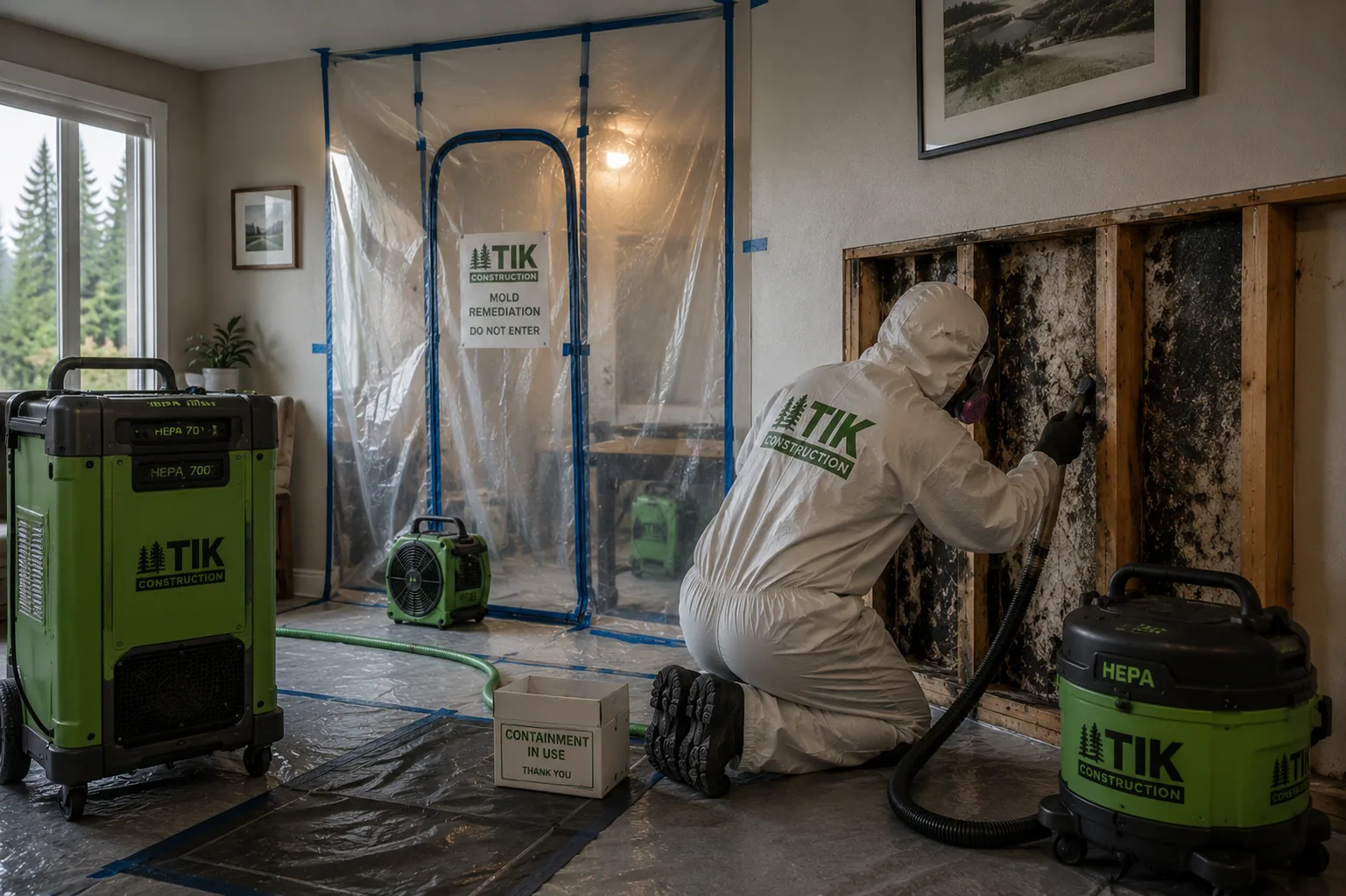
Typical mold remediation scenario in La Center: Older homes near downtown and the river combine ground moisture with the region's sustained humidity, producing crawl space and basement mold — a bigger issue in La Center's lower-lying river corridor than in the newer subdivisions built farther from the water. Newer construction in Highland Terrace and Stephens Hillside Farm sees more condensation-driven bathroom mold from underperforming ventilation.


