
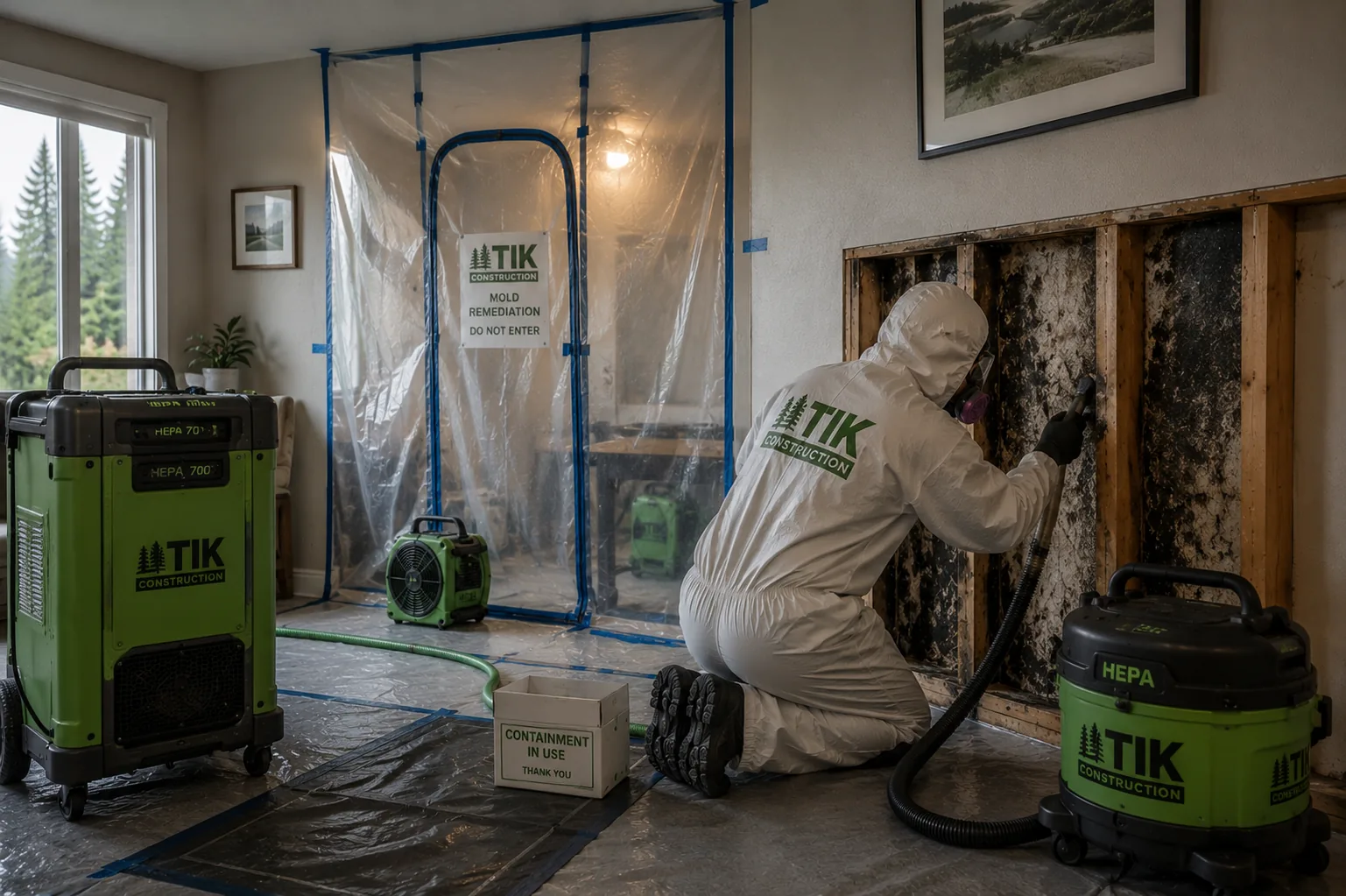
Mold Remediation in Lake Oswego, OR: what we see locally
Lake Oswego sits south of Portland on the Willamette River, built around Oswego Lake — a privately managed lake formed by a dam, ringed by residential lots with lake access rights. Around 40,000 residents live in a city with some of the highest home values in the metro area.
Housing stock splits by era and elevation. First Addition and Old Town, near downtown and the lake's north shore, have older homes — many from the mid-20th century — increasingly being torn down and replaced with larger new construction given the land values. Mountain Park, on the west hillside, is a large 1970s planned community of condos, townhomes, and single-family homes with shared HOA infrastructure. Lake Grove, Palisades, and Uplands run newer and larger, with mature tree canopy throughout the city.
Lake Oswego's tree canopy is dense even by Portland-metro standards — Douglas fir and oak line most residential streets — which means wind events put a lot of overhead weight near homes. Lake- and river-adjacent lots also carry more groundwater and drainage exposure than hillside properties farther from the water.
Typical mold remediation scenario in Lake Oswego: Mold calls follow the moisture map — crawl space and basement mold in older lake-adjacent homes with higher groundwater, and condensation-driven bathroom mold in Mountain Park's condo and townhome units where shared mechanical systems sometimes underperform.